Learning how to make money blogging is not difficult because the concepts are complex. It is hard because most advice collapses the process into outdated slogans about passive income and keyboard-mashing.
We spent the last five years running publishing operations, testing conversion mechanics, and tracking algorithm adjustments. In 2026, over 600 million blogs exist worldwide, and generative AI tools have pushed daily publication volumes past 7.5 million posts.
The barrier to writing text is zero, which means plain text no longer holds value. You do not get paid for typing words onto a screen; you get paid for solving an operator’s problem, steering a buyer to the exact software they need, or packaging knowledge into a format people will happily pay for.
This how to make money blogging guide strips away the motivational fluff. We will show you the exact systems, platforms, and monetizable frameworks that move a site from a hobby project to a profitable media asset. Expect a rigorous approach to execution.
Overview
A modern blog is an organic search engine that feeds a commercial funnel. The global content marketing industry is expanding rapidly, but the rewards concentrate tightly among the 10% of operators who treat their publication as a real business.
[ Organic Traffic (Search/Social) ] ──> [ Targeted Content Hub ] ──> [ Commercial Funnel (SaaS/Products) ]
When you learn ways to make money blogging, you quickly realize that relying on a single revenue stream is a fatal error. The most resilient setups combine ad revenue, high-ticket affiliate programs, and digital products.
Furthermore, you must design for AI-driven search environments. Generative engines like Perplexity, Google AI Overviews, and ChatGPT dominate search behavior. They do not scrape shallow listicles; they summarize deep, authoritative articles that answer questions with specific data. If your content is comprehensive and highly structured, these engines will cite your blog as their primary reference, sending highly qualified visitors directly to your pages.
Still, you need to be realistic about timelines. Do not expect to make your first dollar in week two. A new publication requires a 6 to 12-month runway of consistent production before search engines trust your topical authority and ad networks approve your inventory.
Step-by-Step Guide
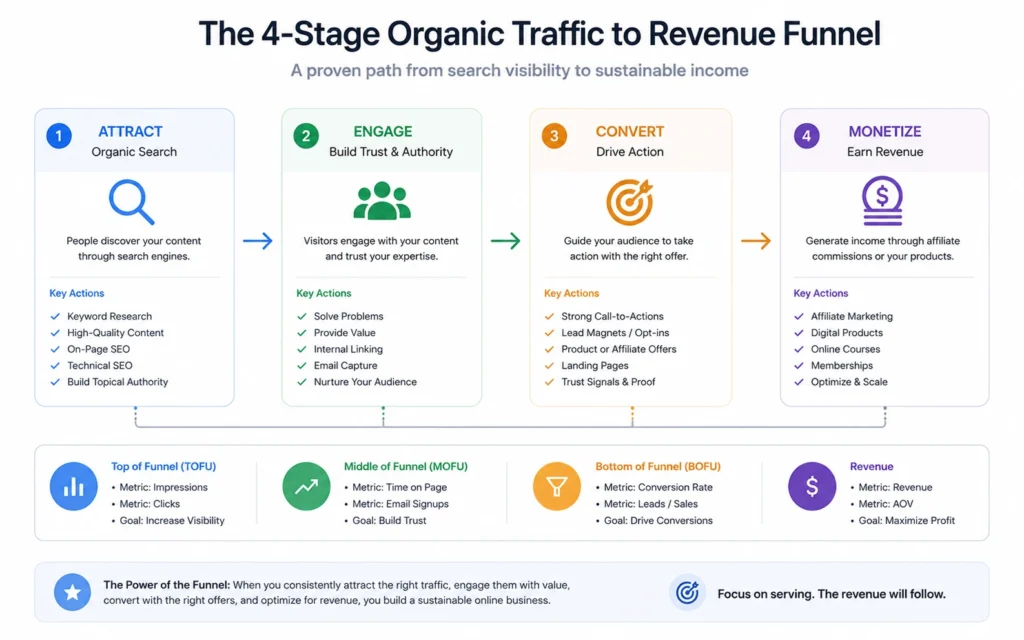
Building a blog that actually earns revenue requires a strict sequence of structural decisions. Skip these foundational layers, and you will waste months writing content that never converts.
Step 1: Select a micro-niche with validated commercial intent
Do not launch a general “lifestyle” or “personal journey” blog unless you have an existing celebrity audience. Broad topics take years to gain traction. Instead, pick a specific problem set where readers actively spend money to save time or solve operational friction.
Look for micro-niches within software, remote productivity systems, or specialized financial services. Use analytics tools to find keywords with clear buyer intent. A keyword with 1,500 monthly searches focusing on “best tools for remote work” will consistently outperform a 20,000-search keyword about general travel inspiration when it comes to actual revenue generation.
Step 2: Set up on WordPress with premium hosting
Your content management platform determines your long-term stability. While platforms like Wix or Squarespace offer simple interfaces, WordPress remains the industry standard for scalable publishing. It powers 43% of the web for a reason: total ownership of your data and unrestricted access to conversion plugins.
Pair your WordPress installation with high-performance, managed hosting. If your page takes longer than 2.5 seconds to load, 53% of mobile visitors will leave before seeing your content. Spend the extra $20 a month on reliable hosting to protect your bounce rate.
Step 3: Publish your core topical cluster
Never write isolated articles on random topics. You must build topical authority by clustering your content around one main subject. Plan your first 15 to 20 articles before writing the first sentence.
Create one massive, comprehensive pillar post (2,500+ words) that covers the entire topic, supported by 5 to 7 smaller spoke articles that dive deep into specific sub-questions. This internal linking structure signals to search engines that your site is an authoritative resource on the subject.
Step 4: Drive initial distribution through social channels and search
Relying purely on search engine indexing will stall your early growth. Once your core cluster is live, syndicate your insights across social channels, relevant community boards, or targeted email newsletters.
Social platforms drive immediate visibility, helping your pages collect initial engagement signals. These early visits, combined with a clean mobile layout and prominent internal links, tell algorithms that your content satisfies real users.
Tips & Examples
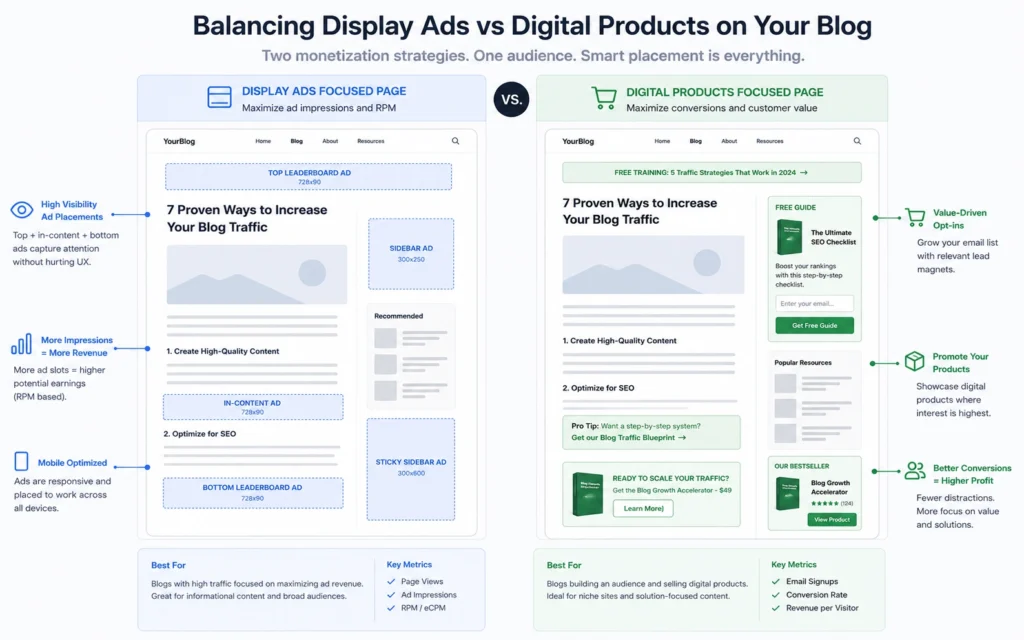
Executing the monetization strategy requires tact. You are building trust with every paragraph, meaning one deceptive affiliate link will destroy months of relationship-building.
[ High-Quality Educational Content ] ──( 90% )──> [ Soft Commercial CTA ] ──( 10% )──> [ Conversion ]
Integrate affiliate links naturally within execution frameworks
When applying how to make money blogging tips, focus on utility over hard selling. If you promote software, do not write a generic review packed with buy buttons. Write an article showing exactly how you use that software to solve a messy problem in your own work.
For example, if you run a blog about remote business operations, write a breakdown titled “How to set up a remote hiring funnel in 4 steps.” Within the step where you discuss database management, link to Notion or Airtable using your affiliate link. The reader clicks the link because they need the tool to execute the step, not because they were aggressively sold to.
Layer display advertising after hitting volume thresholds
Do not clutter your site with display ads on day one. A blank page covered in pop-ups will ruin your user experience and destroy your chances of ranking.
Wait until you hit a consistent 10,000 monthly sessions before applying for premium ad networks like Raptive or Mediavine. These networks manage the ad placements for you, ensuring the layout remains clean and readable on mobile devices while generating a reliable CPM income stream.
Package your expertise into a digital asset
Affiliate commissions give you a percentage of someone else’s sale; digital products give you 100% of the revenue. Once your blog generates steady traffic, look for the most common question in your comments and build a paid asset to solve it.
Create comprehensive templates, spreadsheet systems, or downloadable workbooks priced between $20 and $100. Feature these products at the bottom of your most popular articles as the logical next step for operators who want to skip the manual setup phase.
Tools to Use
Using the right software stack saves you hours of manual operational work. Here are the specific applications required to run a professional publishing business.
- WordPress.org: The non-negotiable publishing foundation. It gives you total control over your database, schema markup, and monetization placements without platform lock-in.
- Ahrefs or Semrush: Essential research applications to verify keyword volume, analyze competitor content gaps, and track your ranking progress across search engines.
- Grammarly or Hemingway Editor: Editing tools to ensure your writing remains clear, concise, and scannable. Modern readers skim text; removing complex prose is mandatory for keeping users on the page.
- Raptive or Mediavine: Premium display ad networks that maximize your revenue per thousand impressions while keeping site speeds high and pop-ups under control.
- Kit: An email marketing platform designed specifically for creators. It lets you capture reader emails through lead magnets and automatically send commercial funnels to your audience.
Frequently Asked Questions
How is AI changing blogging in 2026?
AI has automated basic research and first drafts, causing a massive influx of shallow content. To earn money today, your blog must feature first-party data, genuine product testing, and original insights that generative search engines cannot synthesize from existing web pages.
Do blogs still matter when people use AI search tools for answers?
Yes, they matter more than ever. AI search engines pull their facts directly from authoritative, deep, well-structured web articles. If you write comprehensive content that solves complex problems, AI engines will cite your blog as their source, driving targeted traffic to your site.
How long does it realistically take for a new blog to make money?
Expect a 6 to 12-month runway of consistent publishing before seeing meaningful revenue. Search engines take time to establish topical authority, and affiliate partners or ad networks require a baseline of consistent monthly visitors to approve your accounts.
Are niche blogs more successful than general lifestyle blogs?
Micro-niche blogs grow much faster because they attract a clearly defined audience. When you write about one specific problem set, you build topical authority rapidly and convert traffic into revenue at a much higher rate than a broad, unfocused publication.
Continue Exploring
- Read the complete guide on building premium creator models to transition your blog from an ad-dependent site to an empire of digital products.
- Try related tools and systems to structure your site map to ensure your content clusters outrank large media publications from day one.