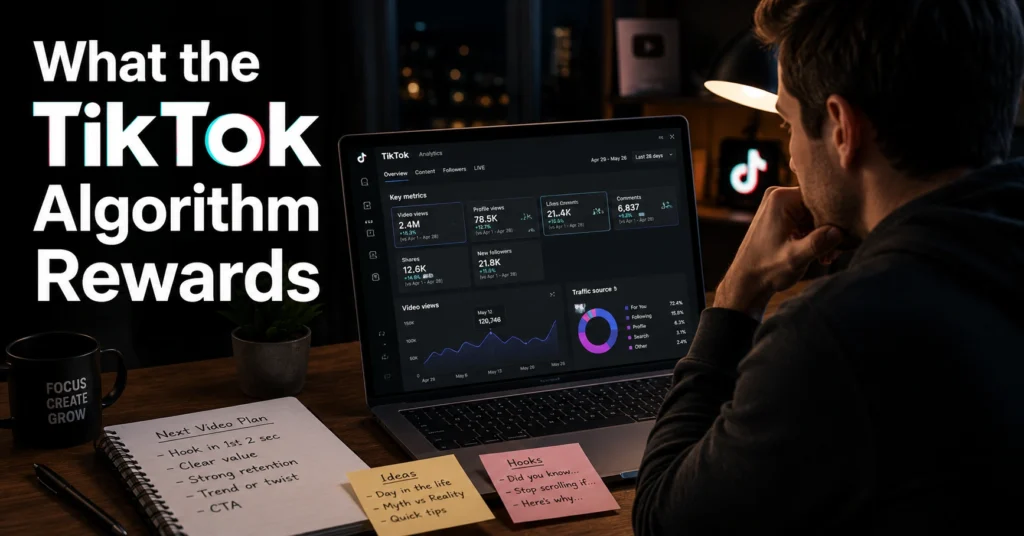
The creators who repeatedly generate high-performing videos are usually doing something far less exciting: they build content around the signals TikTok already rewards. Watch time. Completion rate. Rewatches. Shares. Saves. Engagement velocity.
A mistake I see often is beginners spending an hour researching hashtags and five minutes improving the actual video. The opposite approach tends to work better. One strong idea packaged well can outperform a perfectly optimized post built on a weak concept.
That’s the shift this guide is designed to make.
Instead of chasing random trends, you’ll learn how to go viral on TikTok by understanding the mechanics behind distribution and applying them to content you can produce consistently.
Overview: TikTok Rewards Retention Before Reach
TikTok does not begin by showing your video to millions of people.
It starts with a small audience.
Then it measures what those people do.
If viewers watch most of the video, replay it, share it, comment on it, or stay engaged until the end, TikTok receives evidence that the content deserves wider distribution.
This is why many creators misunderstand virality.
They think reach creates engagement.
More often, engagement creates reach.
The algorithm is effectively asking one question:
“Do viewers want to keep watching this?”
Everything else comes after that.
A 12-second video with a 95% completion rate can outperform a 60-second video with weak retention.
A niche educational video with strong shares can outperform a broad entertainment video that viewers abandon halfway through.
The strongest mental model is simple:
Hook → Retention → Engagement → Distribution
Not:
Post → Hashtags → Viral
That distinction matters.
Because once you understand it, your content decisions become much easier.
Step-by-Step Guide: Build Videos Around the Signals TikTok Measures
Step 1: Start With One Clear Outcome
Many TikTok videos fail before recording starts.
The creator hasn’t decided what the viewer should receive.
A useful video normally delivers one thing:
- One lesson
- One surprise
- One story
- One result
- One opinion
Trying to fit multiple ideas into a short-form video usually reduces retention.
Choose one outcome.
Build everything around it.
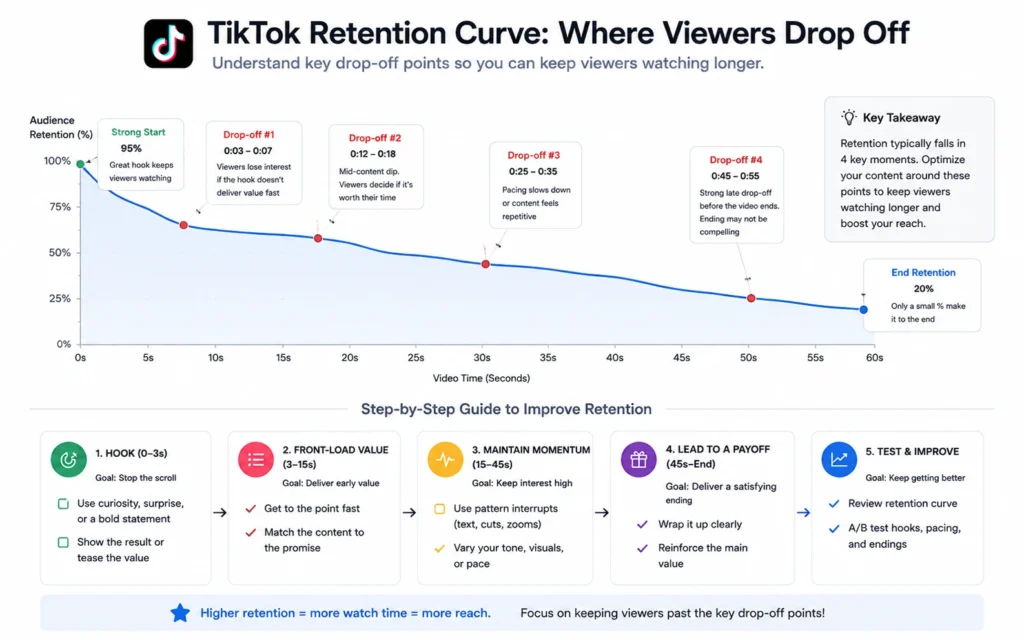
Step 2: Write the First Three Seconds First
The opening matters more than the middle.
That’s not an opinion.
It’s a production reality.
When viewers scroll, TikTok receives immediate feedback about whether your video deserves attention.
Instead of opening with introductions, start with movement, tension, curiosity, or a result.
Weak opening:
“I wanted to share some tips about…”
Stronger opening:
“I gained 12,000 followers after fixing this one mistake.”
The viewer immediately knows why they should continue.
Step 3: Remove Every Unnecessary Second
One editing habit improves retention more than most growth hacks.
Cut faster.
Then cut again.
When I review short-form videos, the most common issue isn’t poor information.
It’s dead space.
Half-second pauses accumulate quickly.
Extra transitions slow momentum.
Repeated points reduce curiosity.
A useful test:
Watch your video at 1.5x speed.
Any section that still feels slow probably needs trimming.
Step 4: Create a Reason to Watch Until the End
Retention increases when viewers anticipate something.
Examples:
- Before-and-after transformations
- Rankings
- Mistakes revealed later
- Results shown at the end
- Story conclusions
This doesn’t require manipulation.
It requires structure.
A strong TikTok often creates an open loop and closes it before the video ends.
Step 5: Encourage Shares Naturally
Shares carry disproportionate value.
People don’t share content because a creator asks.
They share content because it helps them communicate something.
Common examples:
- “Send this to someone starting a YouTube channel.”
- “Every freelancer should know this.”
- “This mistake cost me three months.”
The content itself creates shareability.
The call-to-action simply highlights it.
Step 6: Publish Enough Videos to Generate Data
One of the biggest misconceptions around how to go viral on TikTok is believing every video should succeed.
That’s not how the platform works.
Many experienced creators see most videos perform normally while a small percentage drive disproportionate reach.
The goal isn’t perfection.
The goal is feedback.
Publishing ten videos teaches more than endlessly refining one.
Tips & Examples: The Patterns That Consistently Generate Reach
The fastest way to improve is to study formats, not individual videos.
Formats are repeatable.
Single viral videos often aren’t.
The “I Tested It So You Don’t Have To” Format
This works because it compresses effort.
The viewer receives the result without investing the time.
Example:
“I tested seven AI video generators. Here’s the one I’d actually pay for.”
The outcome is immediately clear.
The Contrarian Observation Format
Strong opinions create attention when supported by evidence.
Example:
“Most creators don’t need better editing. They need better video ideas.”
This works because it challenges an existing belief.
But the explanation must justify the claim.
Without proof, it becomes noise.
The Mistake Breakdown Format
People learn faster from mistakes than instructions.
Example:
“Three things that killed my TikTok retention.”
The viewer immediately understands the benefit.
They want to avoid the same outcome.
The Before-and-After Format
Transformation remains one of the strongest content structures available.
Fitness.
Editing.
Writing.
Business.
Design.
The mechanism is identical.
Show change.
Explain the process.
Reveal the result.
An Honest Limitation Most Guides Ignore
Not every niche produces viral content equally.
That’s reality.
A niche with broad appeal often generates more reach than a highly technical niche.
Still, broader reach does not automatically produce better outcomes.
I’ve seen creators with modest audience sizes generate more revenue than accounts with hundreds of thousands of followers because their audience fit was stronger.
Reach matters.
Audience relevance matters more.
That’s an important distinction.
Tools to Use: Focus on Workflow, Not Software Collecting
Creators often buy tools before they build systems.
That’s backwards.
Use tools to accelerate proven workflows.
Not to compensate for missing ones.
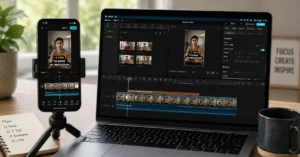
CapCut
Useful for:
- Fast editing
- Captions
- Templates
- Short-form workflows
The advantage isn’t complexity.
It’s speed.
Many creators can move from recording to publishing in under 30 minutes.
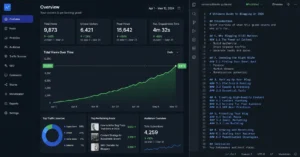
TikTok Analytics
This should be reviewed weekly.
Not obsessively after every upload.
Pay attention to:
- Average watch time
- Completion rate
- Traffic sources
- Audience retention
One practical observation:
Videos that feel similar can produce dramatically different retention curves. Reviewing analytics often reveals that a weak hook—not the topic—is responsible.
Notion
Useful for:
- Content planning
- Idea databases
- Publishing schedules
- Performance tracking
A simple content system often outperforms a complicated one.
One database for ideas.
One database for published content.
That’s enough for most creators.
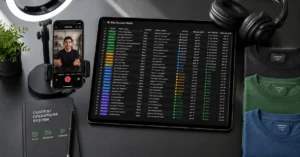
Spreadsheet Tracking
This sounds boring.
It works.
Track:
- Upload date
- Topic
- Hook
- Length
- Views
- Shares
- Saves
After 30–50 videos, patterns begin appearing.
You’ll discover which hooks consistently outperform others.
That’s more useful than guessing.
What to Skip — and What to Use Instead
Skip buying expensive growth courses before publishing consistently.
Instead:
Record 30 videos.
Analyze the results.
Then invest in tools or education based on actual bottlenecks.
The sequence matters.
Frequently Asked Questions About How to Go Viral on TikTok
How many times should I post on TikTok each day?
One strong video is better than several weak ones. Most beginners benefit more from publishing consistently three to seven times per week while improving hooks, retention, and packaging than from chasing volume alone.
Do hashtags help videos go viral?
Hashtags help TikTok categorize content, but they rarely compensate for weak viewer engagement. Strong watch time and retention usually have a larger impact on distribution than hashtag selection.
How long should a TikTok video be?
The ideal length depends on the topic. The better question is whether viewers finish watching. A shorter video with stronger completion rates often outperforms a longer video that loses attention early.
Why did one TikTok video perform well while similar videos failed?
Small differences create large outcomes. A stronger hook, better pacing, clearer title text, or more engaging opening scene can significantly change retention and distribution.
Is TikTok luck or skill?
Both exist. You cannot control audience response completely. You can control topic selection, packaging, hooks, pacing, editing, and publishing frequency. Skill improves the odds that luck has something useful to work with.
Continue Exploring
- Short-form video fundamentals: This hub connects retention, hooks, editing, and platform-specific strategy into a complete publishing system.
- TikTok editing tools: If production speed is limiting output, compare editing tools before adding more software to your workflow.