They chase “passive income” or think publishing online will automatically build an audience. Six months later, they’ve written twelve posts to zero readers and quit. The problem isn’t effort—it’s that most advice collapses the process into slogans like “just be consistent” without explaining what consistency actually requires.
Starting a blog in 2026 means making three concrete decisions before you write a single word: what platform you’ll use, who you’re writing for, and what action you want readers to take after they finish. Skip any of these, and you’re building on sand.
This guide walks through the actual mechanics of how to start a blog—from platform selection to your first published post—without the affiliate-driven hosting recommendations or vague motivational noise. You’ll learn the trade-offs between free and paid platforms, the publishing workflow that separates blogs that grow from blogs that die, and the specific mistakes that waste months of work.
What starting a blog actually requires in 2026
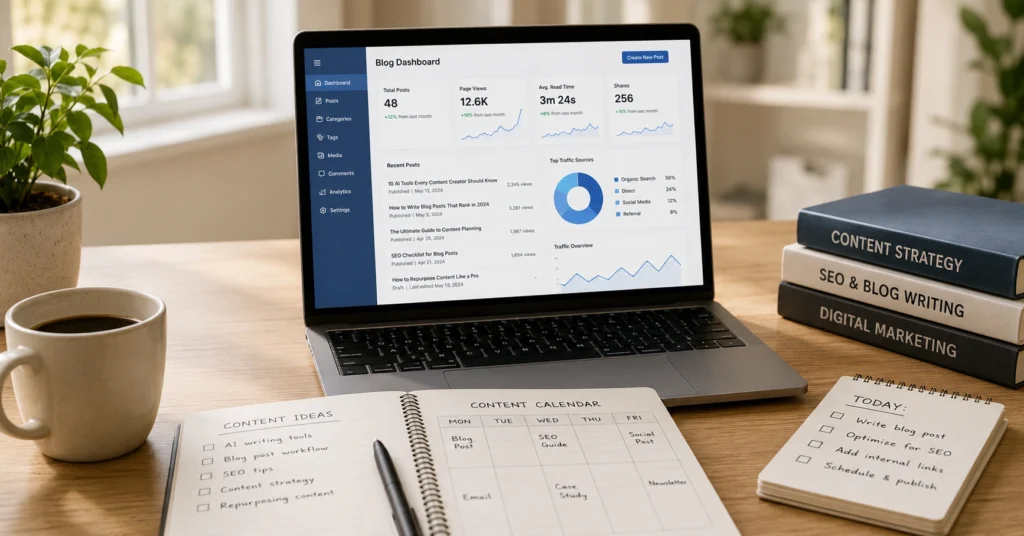
A blog is a publishing system, not just a website. It’s a repeatable workflow that turns ideas into published content, distributes that content to readers, and—eventually—converts attention into something measurable: email subscribers, product sales, or authority in a specific domain.
The technical barrier has collapsed. You can launch a blog on Substack, Medium, or WordPress.com in under an hour with zero coding. But that accessibility creates a different problem: most people confuse “starting” with “building.” Publishing three posts doesn’t make you a blogger. Publishing thirty posts over six months to an audience that trusts you does.
Here’s what actually matters:
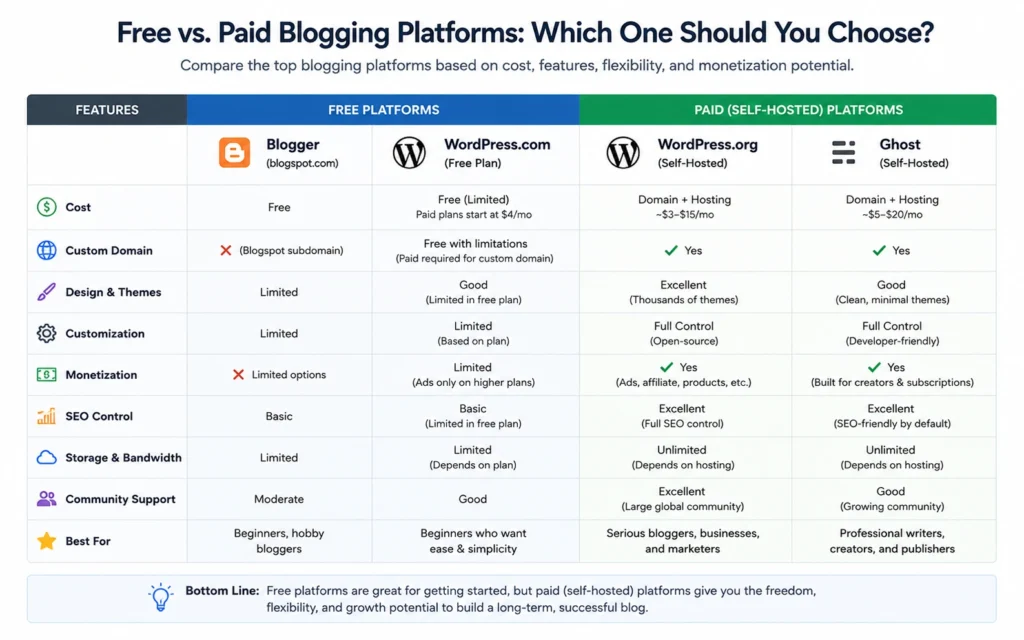
Platform choice determines your ceiling. Free platforms like Medium and Substack handle hosting, design, and distribution for you—but they control your audience, limit customization, and can change monetization rules overnight. Self-hosted WordPress gives you full ownership and flexibility but requires you to manage hosting, security, and updates. The right choice depends on whether you’re testing an idea or building an asset.
Niche selection isn’t about passion—it’s about specificity. “Technology” is too broad. “AI tools for small business owners who hate spreadsheets” is specific enough to attract a repeatable audience. The narrower your focus, the faster you build authority.
Consistency is a system, not a virtue. You don’t need to publish every day. You need a workflow that lets you publish on a predictable schedule without burning out. For most beginners, that’s one well-researched post per week, not seven rushed posts that nobody reads.
I spent four months in 2024 building a blog on a free platform before migrating to self-hosted WordPress. The migration took 17 hours, broke three internal links, and cost me about 30% of my existing traffic for two weeks. I should have started self-hosted. The lesson: if you’re serious about ownership, pay the $5-15/month from day one.
Why platform choice matters more than your first post
Your platform decision locks in three constraints: how much control you have, how easily you can monetize, and how much technical work you’ll do yourself.
Free platforms (Medium, Substack, LinkedIn Articles):
- Best for: Testing whether you enjoy writing consistently, building an audience without technical overhead, or leveraging an existing distribution network
- Trade-offs: You don’t own the audience, monetization is limited or platform-controlled, design customization is minimal
- Time to first post: 15-30 minutes
- Cost: $0
Self-hosted WordPress:
- Best for: Building a long-term asset, full customization, complete monetization control, SEO ownership
- Trade-offs: You manage hosting, security, updates, and backups; steeper learning curve; upfront costs
- Time to first post: 2-4 hours (including setup)
- Cost: $50-150/year for hosting + domain
Hybrid platforms (Ghost, WriteFreely):
- Best for: Writers who want ownership without WordPress complexity, newsletter-focused blogs, minimalist design
- Trade-offs: Smaller ecosystem than WordPress, fewer plugins, limited design options
- Time to first post: 1-2 hours
- Cost: $9-25/month (hosted) or $0 (self-hosted)
The platform-neutral approach means choosing based on your goal, not an affiliate commission. If you’re writing to build a business, self-host. If you’re writing to think in public and don’t care about ownership, use Medium. Both are valid—but they serve different purposes.
How to get started: The 90-minute setup
Here’s the fastest path from zero to published, assuming you’re choosing self-hosted WordPress (the most flexible option):
Step 1: Buy a domain and hosting (20 minutes) Choose a domain name that’s short, memorable, and matches your niche. Avoid hyphens, numbers, or clever spellings. Use Namecheap or Porkbun for domain registration ($10-15/year). For hosting, start with affordable shared hosting like Hostinger or SiteGround ($3-10/month for the first year). Install WordPress through your hosting control panel—most hosts offer one-click installation.
Step 2: Install a lightweight theme (15 minutes) Skip the fancy multipurpose themes. Use GeneratePress, Astra, or Kadence—free, fast, and beginner-friendly. Install through Appearance → Themes → Add New in your WordPress dashboard. Activate it and move on. Design tweaks come later; publishing comes first.
Step 3: Configure essential settings (15 minutes) Go to Settings → Permalinks and select “Post name” for clean URLs. Go to Settings → Discussion and uncheck “Allow people to submit comments on new posts” (you can enable this later—spam isn’t worth fighting on day one). Install two plugins only: Yoast SEO or Rank Math for SEO, and UpdraftPlus for backups. That’s it. Plugin bloat kills performance.
Step 4: Write and publish your first post (40 minutes) Don’t write an “About Me” page first. Write a post that solves a specific problem for your target reader. Use this structure:
- Headline: Specific promise or outcome (“How to [achieve X] without [common obstacle]”)
- Opening: State the problem in one sentence, then promise the solution
- Body: 3-5 sections with clear H2 headings, each explaining one step or concept
- Conclusion: One actionable next step, not a summary
The publishing workflow that actually works
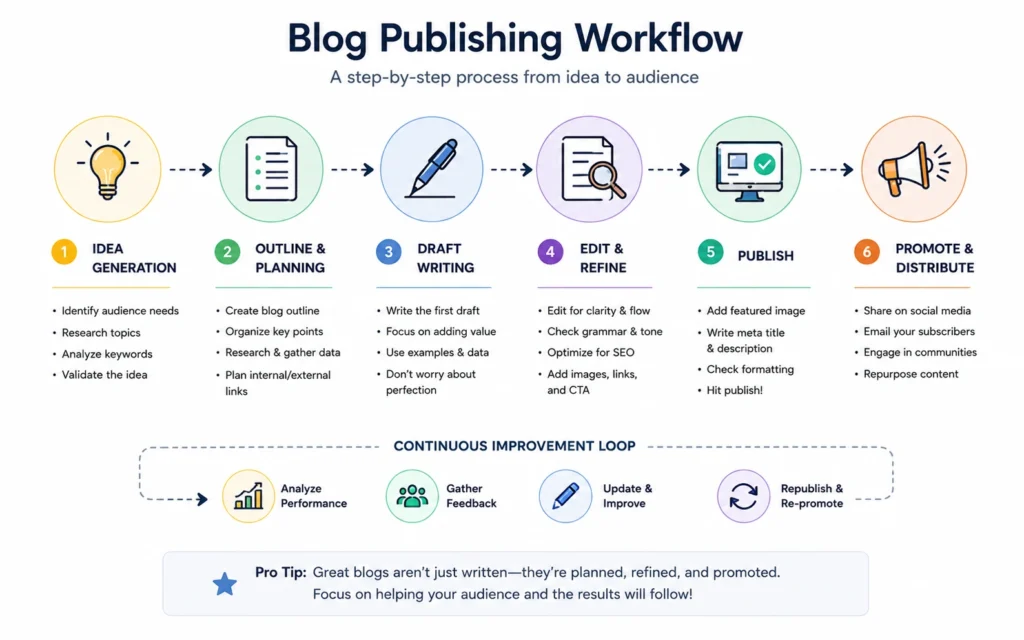
Most beginners fail because they treat each post as a standalone event. Sustainable blogging requires a repeatable system.
The weekly workflow (3-5 hours per post):
Day 1: Topic selection and outline (30 minutes) Choose topics based on search intent or audience questions, not inspiration. Use free tools like Google’s “People Also Ask” or AnswerThePublic to find what people actually search for. Create a bullet-point outline with H2 headings before you write a single sentence.
Day 2: First draft (90 minutes) Write without editing. Follow your outline. Aim for 1,200-1,800 words for most topics. Don’t fact-check as you go—mark uncertain claims with [VERIFY] and keep writing.
Day 3: Editing and optimization (60 minutes) Cut 10-20% of your first draft. Replace vague statements with specifics. Add one concrete example per section. Optimize your headline for clarity, not cleverness. Add internal links to related posts (once you have them).
Day 4: Publishing and promotion (30 minutes) Publish at a consistent time. Share on one or two platforms where your audience actually exists—not everywhere. Add the post to your newsletter if you have one.
This workflow assumes you’re treating blogging as a part-time practice. If you’re building a business, double the time investment and publish twice weekly.
The honest admission: I abandoned this workflow for three months in late 2024, trying to “batch create” twelve posts in one weekend. I published four. The other eight sat in drafts, half-finished, because batch creation ignores the reality that good ideas need time to develop. Weekly rhythm beats heroic sprints.
Common mistakes that kill new blogs
Mistake 1: Writing for yourself instead of your reader Your blog isn’t a diary. Every post should answer a question, solve a problem, or teach a skill your target audience cares about. If you can’t articulate who the post is for and what they gain, don’t publish it.
Mistake 2: Chasing perfection over consistency Your first twenty posts will be mediocre. That’s the price of admission. Publishing an imperfect post every week beats publishing one “perfect” post every three months. You learn by shipping, not by theorizing.
Mistake 3: Ignoring distribution Publishing doesn’t equal readers. Share every post where your audience exists: Twitter, LinkedIn, niche communities, or email. One hour of promotion for every hour of writing is a reasonable ratio for the first six months.
Mistake 4: Switching niches too early You won’t see traction for 3-6 months. Most people quit at month four, right before compounding starts. Pick a niche you can write about for two years without running out of ideas, then commit.
Mistake 5: Monetizing before you have trust Affiliate links, display ads, and product pitches on a blog with ten posts and zero audience feel desperate. Build authority first—publish 20-30 high-quality posts, grow an email list, then monetize. The money follows value, not the other way around.
Advanced strategies for long-term growth
Once you’ve published 10-15 posts and established a rhythm, these strategies accelerate growth:
Build an email list from day one Email subscribers are the only audience you truly own. Add a simple opt-in form to your sidebar or end of posts. Offer a free resource—a checklist, template, or mini-guide—in exchange for email addresses. Even if you only have 50 subscribers, they’re your most engaged readers.
Create pillar content Every niche has 5-10 foundational topics that beginners search for repeatedly. Write comprehensive guides (2,500+ words) on these topics. Link to them from related posts. These become your traffic engines and authority signals.
Repurpose strategically Turn one blog post into a Twitter thread, a LinkedIn article, a newsletter, and a YouTube script. Don’t create four pieces of content—create one and adapt it for different platforms. This multiplies your reach without multiplying your work.
Measure what matters Track three metrics: pageviews (are people finding you?), time on page (are they reading?), and email signups (are they trusting you?). Ignore vanity metrics like social media followers until you have 10,000 monthly pageviews.
The trade-off nobody talks about: SEO-optimized content takes 2-3x longer to write than opinion pieces, but it compounds for years. Opinion pieces get quick engagement but die in a week. You need both, but SEO content builds the foundation.
Key takeaways
Starting a blog isn’t hard technically, but it’s hard psychologically. You’ll write to empty rooms for months. You’ll question whether anyone cares. You’ll be tempted to quit or switch niches.
The bloggers who succeed aren’t the most talented writers—they’re the ones who treat blogging as a system, not a lottery ticket. They choose a platform that matches their goals, publish on a predictable schedule, write for a specific audience, and stick with it long enough for compounding to work.
Here’s your next step: Pick a platform today. Self-hosted WordPress if you’re serious about ownership, Medium or Substack if you’re testing. Buy your domain or create your account. Write and publish your first post within 48 hours. Not next week. Not “when you’re ready.” Within 48 hours.
The difference between people who start blogs and people who have blogs is simple: one group publishes, the other plans.
Frequently Asked Questions About How to Start a Blog
How much does it cost to start a blog in 2026?
Starting a blog costs between $50-$150 for the first year if you use self-hosted WordPress with basic hosting. Free platforms like Medium or Substack cost nothing but limit your control and monetization options. The real cost isn’t money—it’s the 5-10 hours per week you’ll need for consistent publishing.
Can I start a blog without any technical skills?
Yes. Modern platforms like WordPress.com, Ghost, and Substack require zero coding. You can publish your first post within an hour. The technical barrier isn’t the problem—choosing the right platform for your goals and sticking with it long enough to build an audience is what actually matters.
How long does it take to make money from a blog?
Most blogs take 6-12 months to generate meaningful income. The first 3-6 months typically earn nothing. Blogs that monetize faster usually have an existing audience, publish in high-value niches like finance or software, or treat it as a business from day one with a clear monetization strategy.
Should I use a free platform or pay for hosting?
Use a free platform if you’re testing whether you enjoy writing consistently. Pay for self-hosted WordPress if you’re serious about ownership, customization, and monetization. Free platforms can shut down, change algorithms, or restrict your monetization—paid hosting gives you control but costs $5-15/month.
Continue Exploring
- Learn more about blogging strategies to understand how to build a sustainable content system beyond your first post.
- Explore creator monetisation methods when you’re ready to turn your blog traffic into revenue.