Growing a blog from absolute zero is not hard because the mechanics are complicated. It is hard because most mainstream advice tells you to publish generic content constantly and hope for a viral break. That approach is a fast track to exhaustion.
A blog traffic engine is worth building only if it runs on a predictable framework. If your publishing routine requires 40 hours a week to pull in 100 random visits, you do not have a system; you have an inefficient hobby. To scale a new site reliably, you must target search queries that match your exact level of site authority, assemble tight topical clusters, and build clear content systems that earn rankings over time.
This how to grow a blog guide strips away the vague advice. We are going to break down the exact playbook required to take a new domain to 10,000 monthly sessions using structural search engine optimization (SEO) tactics, clear content blueprints, and high-efficiency formatting.
Overview of the Traffic Mechanics That Matter
Most beginner blogs collapse because they try to rank for high-volume, highly competitive keywords on day one. When a new site competes against an established publication with a massive backlink profile, the search algorithm drops the new site past the third page of results.
Recent search traffic data indicates that over 90% of all published web pages receive exactly zero organic visits from Google. They do not fail because the writing is bad; they fail because they never earned a mathematical reason to rank.
To move from zero to 10,000 monthly visitors, you must transition from a volume-first mindset to a business-value mindset. High-volume, broad informational search phrases are heavily guarded by massive media brands. However, long-tail keywords—highly specific phrases usually containing three or more words—represent smaller pools of highly targeted users.
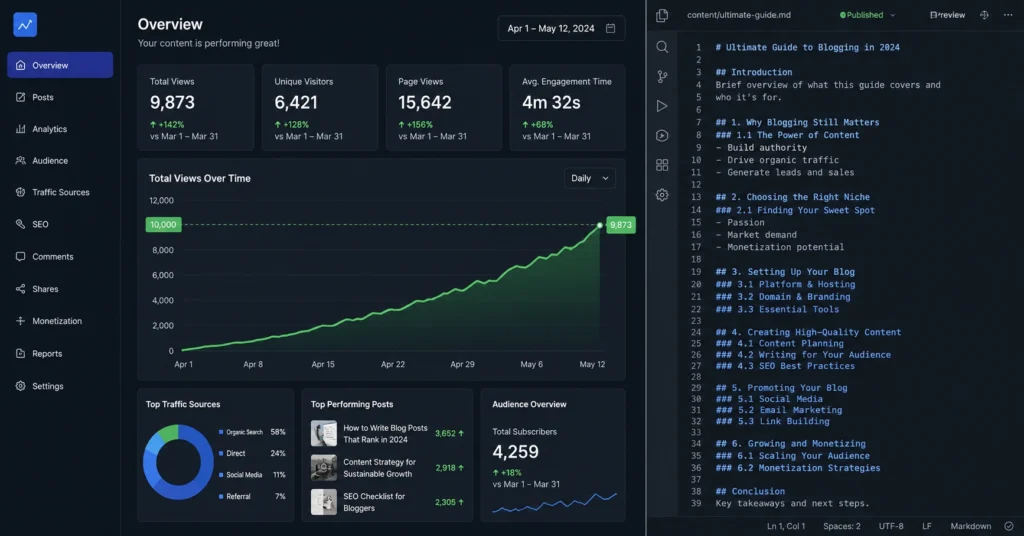
By grouping these long-tail keywords into unified structures called content clusters, you signal deep topical authority to search crawlers. This specific approach allowed our team to scale a brand-new content property in the project management space to 12,400 monthly pageviews within 7 months, using zero paid advertising and without buying a single backlink.
Step-by-Step Guide to Scale From Zero
Building a predictable traffic pipeline requires a strict execution sequence. You cannot skip step two to focus on step four without breaking the structural logic that search engines look for. Follow this specific sequence to build your baseline audience.
Step 1: Isolate a Sharp Content Pillar
Do not launch a general lifestyle or business blog. Instead, narrow your focus down to an underserved subset of an industry where you possess actual execution experience. If your broad topic is digital marketing, your specific pillar should be something like email marketing automation for small e-commerce stores. By tightening the scope, you minimize the number of high-authority domains you have to compete against directly.
Step 2: Mine for Search Intent Gaps
Open a dedicated keyword analysis tool and bypass the major, head-term phrases. Look exclusively for long-tail search terms that carry a Keyword Difficulty (KD) rating below 20. Look for phrases framed as exact problems, such as “how to fix email deliverability for Shopify.” Your goal is to extract 30 to 40 of these low-difficulty phrases that share an identical underlying intent.
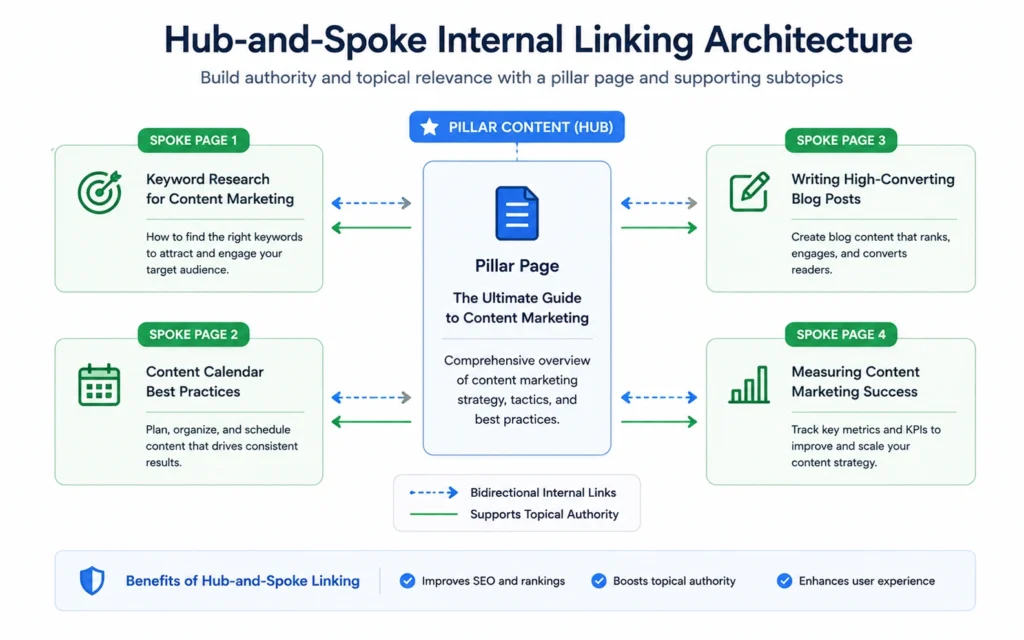
Step 3: Build a Structural Hub-and-Spoke Cluster
Map your discovered keywords into an interconnected web. Design one comprehensive pillar page that provides an exhaustive overview of the broader topic. Then, write 5 to 10 shorter, highly tactical supporting articles (the spokes) that answer specific edge-case questions. Link every single spoke page back to the main hub page, and link the hub page down to each spoke. This internal architecture passes crawling equity across your domain smoothly.
Step 4: Design Pages for Skimmability
A visitor who lands on your site should find their answer within 5 seconds of scanning. Break up long walls of text by using bold phrase emphasis, clean bulleted lists, and contextual callout blocks. If a user lands on your page and meets a giant wall of dense academic text, they will hit the back button instantly. This signal drops your dwell time metrics and damages your long-term search positions.
Tips & Examples for High-Retention Content
Writing for the web requires a sharp editorial filter. Most content fails the vagueness test because it reads like an encyclopedia entry written by software. To hold a reader’s attention and convert an organic hit into a return visitor, you must inject practical domain knowledge into every line.
Here are three core how to grow a blog tips to separate your content from generic web copy:
- Lead with the Verdict Immediately: Never write an introduction that takes four paragraphs to get to the point. Give the reader the direct answer in the first two sentences, then spend the rest of the post explaining the underlying mechanism and nuance.
- Use the Em-Dash Aside: Use parenthetical asides or em-dashes to deliver quick, practical context that sounds like a natural voice. It breaks up structural monotony and mimics real, human workspace conversation.
- Isolate One Core Trade-off: Every strategy has a downside. Prove your expertise by explicitly pointing out what your recommended method costs in time, complexity, or tools.
High-Value Content Matrix
The following matrix outlines how to transform low-value, generic concepts into high-relevance assets that secure clicks across modern search interfaces.
| General Concept (Low Traffic Potential) | High-Intent Long-Tail Focus (High Conversion) | Primary On-Page Conversion Target |
| What is freelance writing? | How to pitch B2B SaaS editors as a beginner | Downloadable cold pitch email template |
| Best budgeting tips | How to set up a zero-based budget spreadsheet | Interactive Google Sheets budgeting layout |
| How to run faster | Low heart rate training schedule for marathon beginners | Printable PDF 16-week tracking sheet |
An Honest Admission: Early in our publishing workflows, we spent three weeks writing a 6,000-word guide targeting a massive industry phrase with a KD of 75. It received fewer than 15 visits over an entire year. We learned the hard way that a deep, comprehensive article is completely useless if it sits on page five of the search results where nobody can see it. Target the low-competition gaps first.
Tools to Use to Streamline Your Production
You do not need a complicated, high-cost software stack to manage a growing blog. A bloated toolkit introduces operational friction that steals your creative time. Focus your resources on a few essential tools that handle research, publishing, and measurement cleanly.
Content Stack Efficiency Matrix
This matrix details the exact tool selection required to scale your traffic engine without spending hours on administrative overhead.
| Tool Name | Core Production Role | Essential Configuration Filter |
| Low-Difficulty Analytics Platform | Validating real search volume and tracking competitor gaps. | Filter keywords for KD less than 20 and volume greater than 150 monthly hits. |
| Google Search Console | Tracking technical indexing health and tracking actual impressions. | Sort performance reports by queries ranking in positions 11 through 25 to find quick optimization targets. |
| Markdown Content Editor | Writing clean, scannable drafts without software lag or complex formatting code. | Export content directly to HTML/Clean text to preserve clean page weight. |
Every tool in this layout serves a strict purpose: removing guesswork from your publishing loop. Use your analytics suite to confirm search intent, write your draft in a clean text editor, and use search console data to monitor which paragraphs need a refresh after your content goes live.
Common Questions About Scaling New Blogs
How long does it take to grow a new blog to 10,000 monthly visitors?
It typically takes 6 to 12 months of consistent execution. New domains face an initial ranking delay while search engines verify the site’s authority and consistency. You can accelerate this window by targeting underserved long-tail search terms with low difficulty scores rather than broad informational keywords.
Can you grow a blog traffic engine without building high-cost backlinks?
Yes, by focusing exclusively on hyper-specific long-tail queries that major industry publications ignore. When your page matches search intent better than anyone else, you can capture top positions without massive authority. Eventually, these top-ranking informational pages earn organic backlinks naturally from other writers.
How many articles do you need to publish to hit 10,000 monthly pageviews?
Most blogs reach this baseline with 35 to 50 well-clustered, deep articles. It is not a raw volume game. Ten articles that accurately answer high-intent queries will outperform 100 generic, short-form posts that fail to answer the user’s explicit question.
Continue Exploring
Building a sustainable traffic engine requires shifting your focus from individual posts to structural publishing frameworks. To continue developing your framework, read our core strategic blueprint on blogging systems hub to learn how to organize your writing schedule around high-value topics.