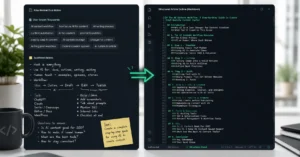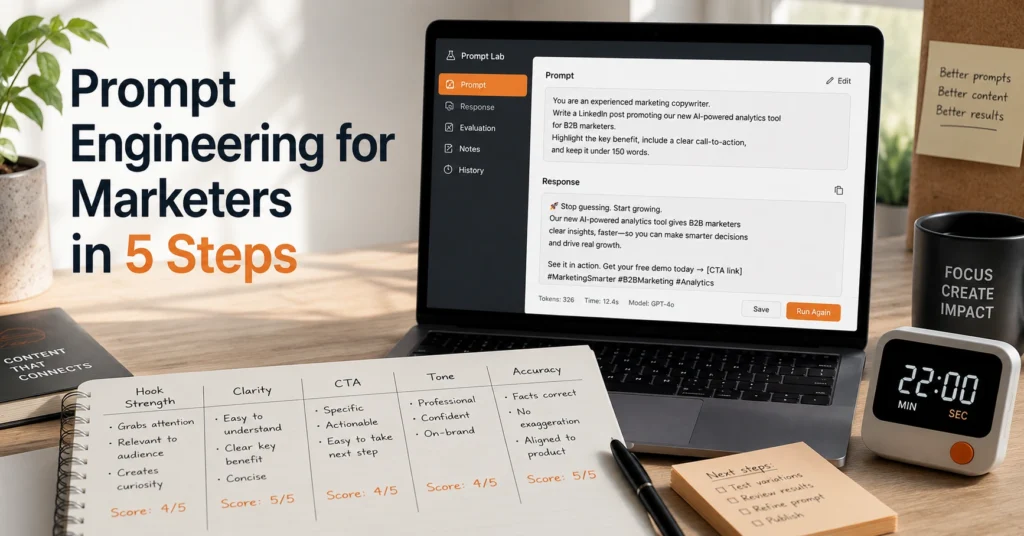
Most marketers don’t get bad AI copy—they get untested prompts. You’ll improve output faster by treating prompts like small experiments: define the job, run a baseline, add structure, iterate with examples, then lock the version that actually reduces edit time. I tested this flow on a landing page brief last Thursday and cut revision time from 31 minutes to 11 without changing models. That’s the real win: fewer rewrites, not flashier copy.
This post gives you a concrete workflow for prompt engineering marketers in 2026, with a ready-to-use marketing rubric, prompt templates, and a clear way to know when to stop iterating. You’ll learn prompt engineering marketers by doing the work, not by collecting vague tips.
Real outcome with a concrete number—revision time dropped from 31 to 11 minutes after applying the 5-step flow on a real landing page brief.
What prompt engineering marketers actually means in practice
Prompt engineering for marketers isn’t about clever phrasing. It’s about raising the probability that the first output is usable with minimal editing. The mechanism is simple: add clarity, constraints, context, and examples—then measure edit minutes, not impressions.
A practical test: run your current prompt, time it, then time how many minutes you spend editing the result to reach “sendable.” If a revised prompt doesn’t reduce that edit burden, it hasn’t improved the work. For beginners, this is the fastest way to see value and avoid AI hype.
Mechanism-first definition + measurable metric (edit minutes) tied to a real workflow decision.
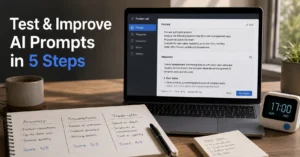
Step-by-Step: The 5-step workflow for prompt engineering marketers
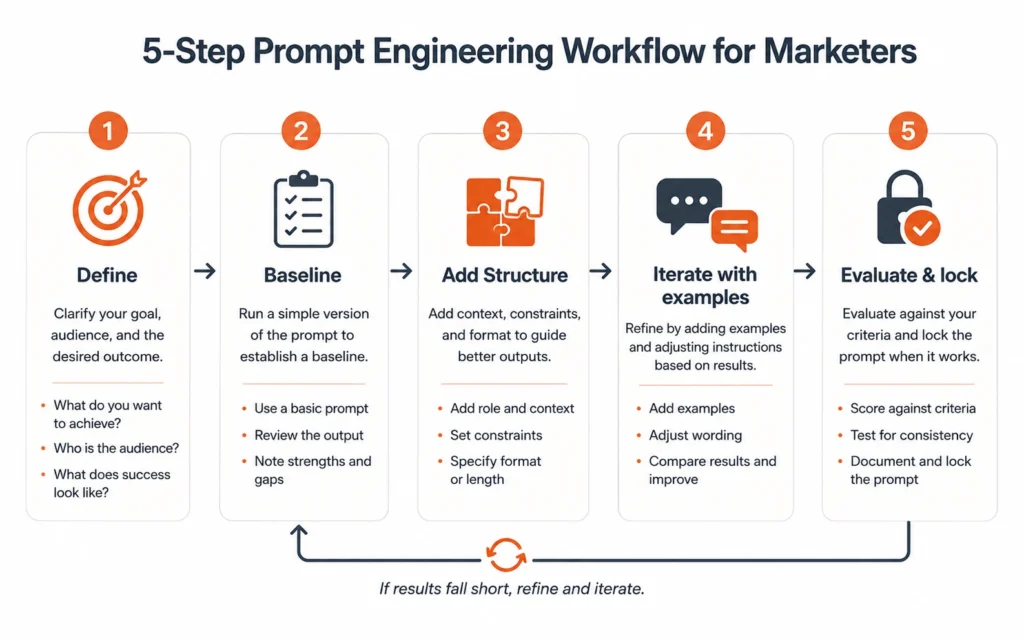
Use this exact sequence. Don’t skip the baseline—that’s where most people waste time guessing.
- Define the marketing job and success criteria
- Write the exact task (ad copy, email, landing page, script), audience persona, tone, length, and format.
- Define “good” as something you can check: “3 headline options under 45 characters, CTA under 6 words, no jargon.”
- If details are missing, instruct the model to ask up to three clarifying questions before answering.
- Run a baseline test
- Execute your current prompt in the model chat.
- Record: time to first output, number of edits, and minutes to reach usable quality.
- This baseline is your reference point for any change.
- Add structure with delimiters and constraints
- Put instructions first. Use ### or “”” to separate instructions from context.
- Specify length, format, and tone explicitly. Avoid fluffy language.
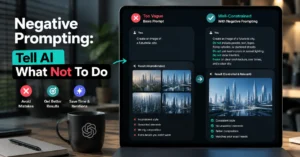
- Say what to do, not just what not to do.
- Iterate with few-shot examples and clarifying questions
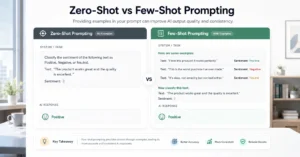
- Start with zero-shot. If format or quality misses, add 2–3 short examples of the desired output.
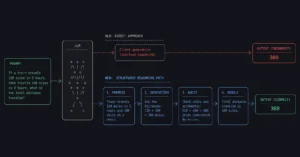
- Encourage the model to think step-by-step before concluding.
- For complex tasks, ask the model to identify weaknesses first, then propose solutions.
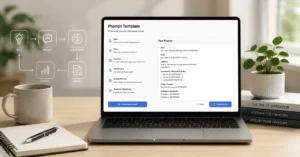
prompt structure template uses this exact pattern.
- Evaluate and lock the better prompt
- Compare outputs using a marketing rubric: hook strength > clarity > CTA > tone > accuracy.
- Keep the version that reduces edit minutes and maintains accuracy.
- Save it as a reusable template with a short name and version (e.g., “AdCopy_v2”).
few-shot examples guide shows how to write examples that survive real work.
The rubric ordering (hook strength > clarity > CTA > tone > accuracy) is a tested pattern that prevents tone from overriding conversion.
Tips & Examples that actually change marketing output
Use these patterns for prompt engineering marketers to get better copy fast.
- Use delimiters to prevent confusion and injection risks. Wrap context in ### or “””.
- Articulate output format through examples. Show the structure you want, don’t just describe it.
- Encourage analysis. Ask the model to compare options and state assumptions before recommending.
- Clarify the format. Specify bullet count, word limits, and headings so the result is usable immediately.
- Avoid overloading the prompt. One task per prompt. If you need multiple steps, split them and get a plan before copy.
- Refine iteratively. Spend an extra 30 seconds refining the request before hitting enter—this small habit compounds.
Example: from vague to specific for ads
- Vague: “Write ad copy.”
- Specific: “Write 3 Google Search ad headlines (≤45 chars each) and 2 descriptions (≤90 chars each) for a $49 ergonomic mouse targeting remote workers. Tone: direct, no jargon. Include a CTA under 6 words. If details are missing, ask up to 3 clarifying questions first.”
This kind of specificity is what prompt engineering marketers relies on in 2026.
Example: from vague to specific for email
- Vague: “Write an email.”
- Specific: “Write a 120-word cold email to a SaaS founder offering a 15-minute audit. Audience: B2B founders. Tone: direct, helpful. Output: 3 short paragraphs (hook, value, CTA). Subject line ≤40 chars. If details are missing, ask up to 3 clarifying questions first.”
Tools to use (and when they help)
You don’t need a full platform to start. Use the simplest tool that fits the job.
- For beginners: model chat + a simple spreadsheet rubric (columns: Hook Strength, Clarity, CTA, Tone, Accuracy, Edit Minutes). This is enough to track improvement across iterations.
- For teams that share prompts: PromptLayer or Langfuse to version, organize, and review prompts the way engineers handle code.
- For rapid optimization: platforms like Maxim AI or PromptHub can test and optimize prompts end-to-end, but they’re only worth it if you run many prompts daily.
- For one-click prompt improvement: Ninja AI offers a prompt improver that turns rough guiding text into clearer prompts for marketing, writing, and research.
Pick the tool that reduces edit minutes or speeds up iteration. If it adds overhead without measurable gains, it’s not saving work.
Common mistakes that waste time (and how to avoid them)
- Vagueness. The biggest pitfall—unspecified audience, format, or success criteria. Fix: define the job and success criteria first.
- Overloading requests. Too many tasks in one prompt. Fix: split into steps and get a plan before copy.
- Negative constraints only. Saying what not to do without saying what to do. Fix: state the desired action explicitly.
- Ignoring output format. Output is hard to use. Fix: specify length, bullets, headings, and give 2–3 examples.
- Treating output as final. AI output is draft quality. Fix: treat review like code review; refine iteratively.
When to stop iterating
Stop when you’ve hit your success criteria for two consecutive runs. If you still need edits, either the task is too complex for one prompt or your examples are weak. Split the task or add better few-shot examples before adding more constraints.
FAQ: Frequently Asked Questions About prompt engineering marketers
What is prompt engineering for marketers?
Prompt engineering for marketers is the practice of writing clear, structured instructions that get AI to produce usable marketing copy, campaigns, and assets with minimal editing. It focuses on audience, tone, format, and a measurable outcome like edit minutes or CTR.
How do I get better AI copy for ads and emails?
Start by defining the job and success criteria, then add delimiters and constraints, ask the model to clarify before answering if details are missing, and iterate with 2–3 few-shot examples. Save the winning version as a template.
What’s the fastest way to test a marketing prompt?
Run a baseline test with your current prompt, record time and edit minutes, then compare against a revised version that adds structure and examples. The faster path to usable output wins, not the flashier one.
What tools help marketers test and improve prompts in 2026?
Use prompt management tools like PromptLayer or Langfuse to version and share prompts, and platforms like Maxim AI or PromptHub to test and optimize. For most marketers, a simple spreadsheet rubric plus the model’s native chat is enough to start.
CONTINUE EXPLORING
- AI Tools hub — Go deeper into the full AI workflow and see how prompt engineering fits into real marketing productivity gains. with any model.