That’s where chain of thought prompting becomes useful.
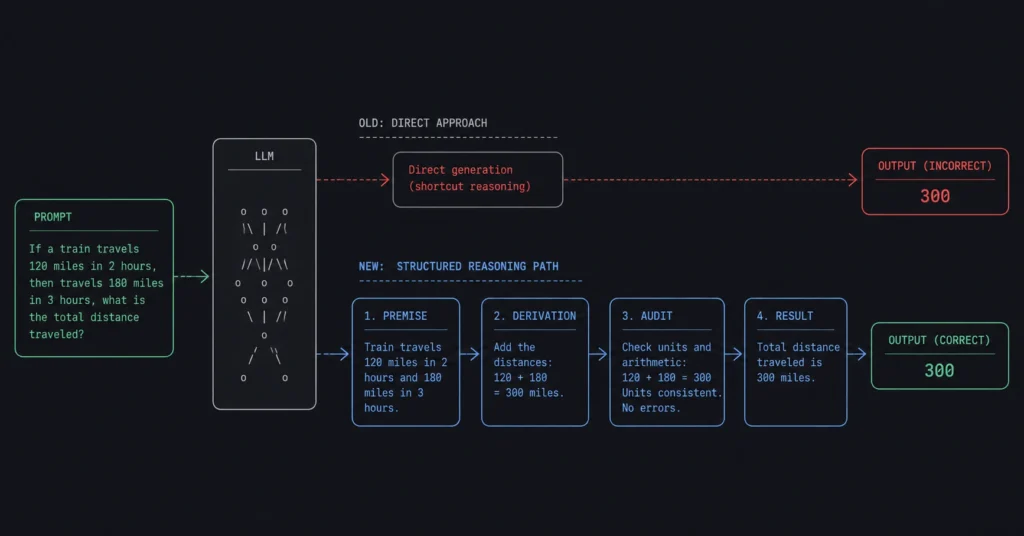
Instead of requesting only the final result, you encourage the model to work through the problem in stages. The technique became popular because it improved performance on tasks involving reasoning, planning, math, analysis, and decision-making. More importantly for beginners, it provides a repeatable way to reduce careless mistakes.
One of the first things I noticed while testing AI workflows was that difficult tasks rarely improved when I added more adjectives to the prompt. They improved when I gave the model a process. That’s the practical value of chain of thought prompting. You’re not searching for a magic phrase. You’re providing a thinking structure.
If you’re learning prompt engineering, this guide will help you understand when chain of thought prompting works, when it slows you down, and how to apply it to real tasks.
What chain of thought prompting actually does
Chain of thought prompting asks the model to approach a problem step by step rather than producing an immediate answer.
Consider a simple request:
Which marketing channel should a local accounting firm prioritize with a limited budget?
A standard prompt may generate an answer immediately.
A chain-of-thought style prompt encourages the model to:
- Identify likely customer acquisition channels.
- Compare cost and effort.
- Evaluate local intent.
- Rank options.
- Recommend one channel.
The difference is not intelligence.
The difference is structure.
Language models are pattern-matching systems. When you provide a reasoning framework, the model has a clearer path to follow. This often improves consistency on tasks that require multiple decisions.
For beginners, chain of thought prompting is best understood as guided reasoning.
Why reasoning frameworks often outperform longer prompts
Many beginners respond to poor outputs by adding more instructions.
The result is usually a larger prompt with the same underlying problem.
Imagine asking:
Create a six-month content strategy for a B2B SaaS company.
That’s a broad request.
Now compare it with:
First identify the audience. Then identify business goals. Then determine content themes. Then propose a publishing schedule. Finally explain why each theme supports the business goal.
The second version gives the model a sequence.
That sequence reduces ambiguity.
A common misconception is that prompt quality depends on length. In practice, clarity matters more. I’ve seen prompts shrink from 400 words to fewer than 100 while producing stronger outputs because the reasoning path became obvious.
That’s an important lesson for prompt engineering in 2026 and beyond.
More words do not automatically create better prompts.
Better structure does.
Step 1: Start with a problem that requires multiple decisions
Chain of thought prompting is not necessary for every task.
Don’t use it to summarize a short email.
Don’t use it to rewrite a sentence.
Don’t use it to generate ten headline ideas.
Use it when the task involves reasoning.
Examples include:
- Business decisions
- Research analysis
- Strategic planning
- Problem solving
- Multi-step calculations
- Prioritization
- Evaluation
A simple test helps.
Ask yourself:
Would a human need to think through several stages before answering?
If the answer is yes, chain of thought prompting is worth testing.
Step 2: Break the task into visible stages
The easiest way to start is by turning one large request into several smaller requests.
Example:
Instead of:
Recommend a project management system.
Use:
Step 1: Identify the team’s requirements.
Step 2: Compare available tools.
Step 3: Evaluate costs.
Step 4: Identify trade-offs.
Step 5: Recommend the best option.
Each step creates structure.
And structure reduces guesswork.
This technique works especially well when the final answer depends on multiple assumptions.
Step 3: Ask for reasoning before conclusions
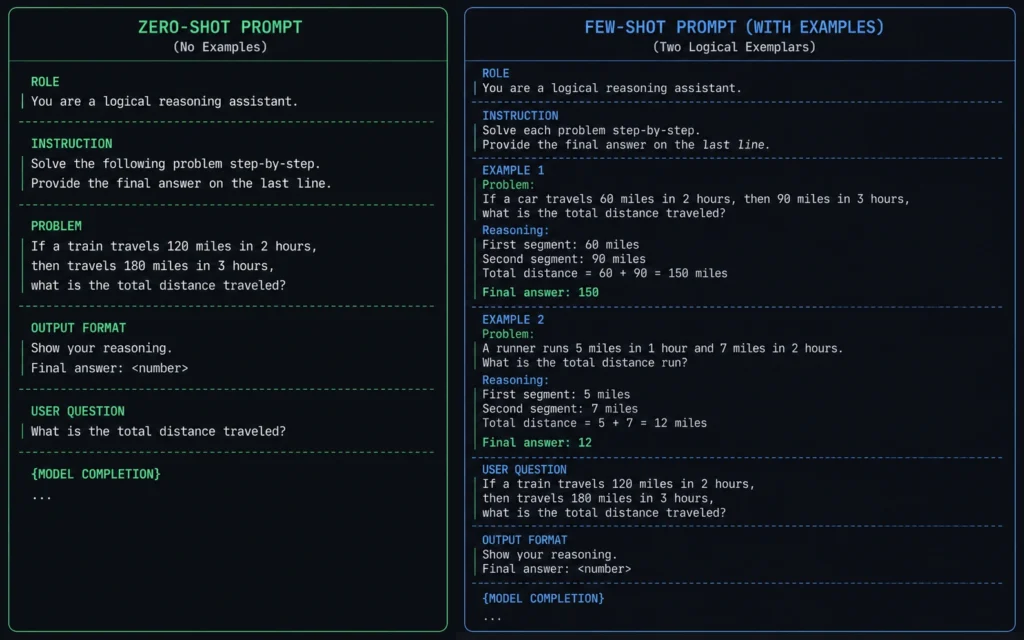
One useful template is:
Analyze the situation step by step before making a recommendation.
Another is:
Explain your reasoning process and then provide the final answer.
For beginner workflows, that’s often enough.
Example:
Analyze this product launch plan step by step. Identify strengths, weaknesses, risks, and missed opportunities before giving a recommendation.
The model now has an explicit process.
Without that instruction, it may jump directly to the recommendation.
Step 4: Review the reasoning, not just the answer
Most people evaluate only the final output.
That misses the biggest benefit of chain of thought prompting.
The reasoning path reveals where the model went wrong.
Suppose the recommendation is weak.
You can inspect the intermediate logic and identify the failure point.
Maybe the assumptions were incorrect.
Maybe the comparison criteria were incomplete.
Maybe an important constraint was ignored.
That visibility makes iteration easier.
Instead of rewriting the entire prompt, you can improve the specific step causing the problem.
A practical template beginners can use immediately
Use this framework whenever the task involves analysis or decision-making.
Task:
[Describe the objective]

Step 1:
Identify the relevant factors.

Step 2:
Analyze each factor.

Step 3:
Compare available options.

Step 4:
Evaluate risks and trade-offs.

Step 5:
Provide a recommendation.

Final Output:
Summarize the reasoning and conclusion.
This template works because it creates a sequence.
The model is no longer guessing how to approach the problem.
Real examples of chain of thought prompting in everyday work
Content Planning
Prompt:
Identify the target audience, list their main problems, group those problems into themes, and then create a three-month content calendar.
The model builds the strategy before generating content ideas.
Hiring Decisions
Prompt:
Review each candidate based on experience, skills, communication ability, and role fit. Compare the candidates before making a recommendation.
The evaluation becomes more transparent.
Market Research
Prompt:
Analyze customer reviews. Identify recurring complaints, group them into categories, rank categories by frequency, and recommend improvements.
The result is usually more structured than a direct request for insights.
The biggest mistake beginners make
They force chain of thought prompting into simple tasks.
That’s unnecessary.
I’ve seen users spend five minutes building reasoning frameworks for requests that needed a one-line prompt.
The goal is not complexity.
The goal is better outcomes.
If a simple prompt works, use it.
This is the same principle behind good automation. A workflow should reduce effort, not create more of it.
The blunt verdict:
Chain of thought prompting is a useful tool. It is not the answer to every prompting problem.
When chain of thought prompting performs poorly
There are situations where it adds little value.
Examples include:
- Basic rewriting
- Short summaries
- Simple formatting
- Idea generation
- Straightforward explanations
In these cases, reasoning steps create overhead without improving results.
A faster alternative is direct prompting.
Example:
Rewrite this email in a professional tone.
No reasoning framework is needed.
The task is already clear.
This trade-off matters because prompt engineering is about efficiency as much as quality.
How chain of thought prompting fits with other prompting methods
Chain of thought prompting works well alongside other techniques.
For example:
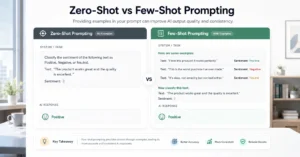
With Zero-Shot Prompting
You provide no examples but still request structured reasoning.
With Few-Shot Prompting
You include examples that demonstrate the reasoning process.
With Role Prompting
You assign expertise first.
Example:
Act as a financial analyst. Evaluate this investment opportunity step by step before making a recommendation.
These techniques are not competitors.
They’re building blocks.
The strongest workflows often combine them.
Tools that support chain of thought prompting
Most modern AI systems can follow structured reasoning instructions.
Common options include:
- ChatGPT
- Claude
- Gemini
The model matters less than the task design.
Many users switch platforms searching for better outputs when the real issue is prompt structure.
A well-designed workflow often creates larger gains than changing tools.
That’s less exciting than tool comparisons.
It’s also more useful.
Chain of Thought Prompting 2026: What beginners should focus on
The conversation around AI prompting changes quickly.
The underlying principle doesn’t.
Clear reasoning produces clearer outputs.
As models improve, the value shifts away from clever prompt tricks and toward workflow design.
That means:
- Better task definitions
- Better constraints
- Better evaluation criteria
- Better reasoning structures
The people getting the strongest results are usually not writing complicated prompts.
They’re building better processes.
Chain of thought prompting remains useful because it helps create those processes.
Frequently Asked Questions About Chain of Thought Prompting
What is chain of thought prompting?
Chain of thought prompting is a prompting technique that encourages an AI model to work through a problem step by step before producing a final answer.
Does chain of thought prompting improve accuracy?
Often, yes. It can improve performance on reasoning-heavy tasks because the model follows a structured process instead of jumping directly to a conclusion.
Is chain of thought prompting useful for beginners?
Yes. Beginners often see immediate improvements because the technique helps organize complex tasks into smaller, more manageable stages.
Should I use chain of thought prompting for every prompt?
No. Simple tasks usually do not benefit from additional reasoning steps. Use it when the problem requires analysis, planning, comparison, or decision-making.
What is the difference between chain of thought prompting and few-shot prompting?
Chain of thought prompting focuses on reasoning structure. Few-shot prompting focuses on learning from examples. They can be used together when a task requires both reasoning and consistency.
Continue Exploring
- Prompt Engineering Hub: Build a stronger foundation in prompt design, workflow structure, and evaluation methods.