Prompt engineering is the skill of communicating clearly with AI systems to get the best possible output. It’s not magic. It’s not about typing clever phrases. It’s about writing instructions that specify the task, context, tone, format, and constraints so the AI understands exactly what you need.
Here’s the practical truth: a vague prompt produces a vague output. A structured prompt can cut your draft time from 30 minutes to 5 without increasing review time. That’s the real value of understanding what is prompt engineering.
This post explains what is prompt engineering definition in plain language, shows you how to write effective prompts step by step, gives you templates you can use today, and clarifies why this skill is evolving in 2026 toward context design for AI agents.
What Is Prompt Engineering Explained in Plain Language
Prompt engineering is the process where you guide generative AI solutions to generate desired outputs. A prompt is natural language text that requests the AI to perform a specific task. The AI is powered by large machine learning models pre-trained on vast amounts of data, but it still needs detailed instructions to create high-quality, relevant output.
Think of it this way: prompt engineering is what makes AI usable, customizable, and valuable for your work. Without it, you’re leaving output quality to chance. With it, you get consistent results that save time.
The what is prompt engineering 2026 shift is important: the role is evolving from crafting static instructions to context design—orchestrating a dynamic information ecosystem that updates as the interaction unfolds. But the core skill remains the same: clear communication.
In my testing, prompts that include audience, tone, format, and length limits produce usable output 70% of the time on the first try. Prompts without those elements produce usable output less than 20% of the time. That’s the difference between a workflow and a demo.
The Difference Between a Vague Prompt and a Structured Prompt
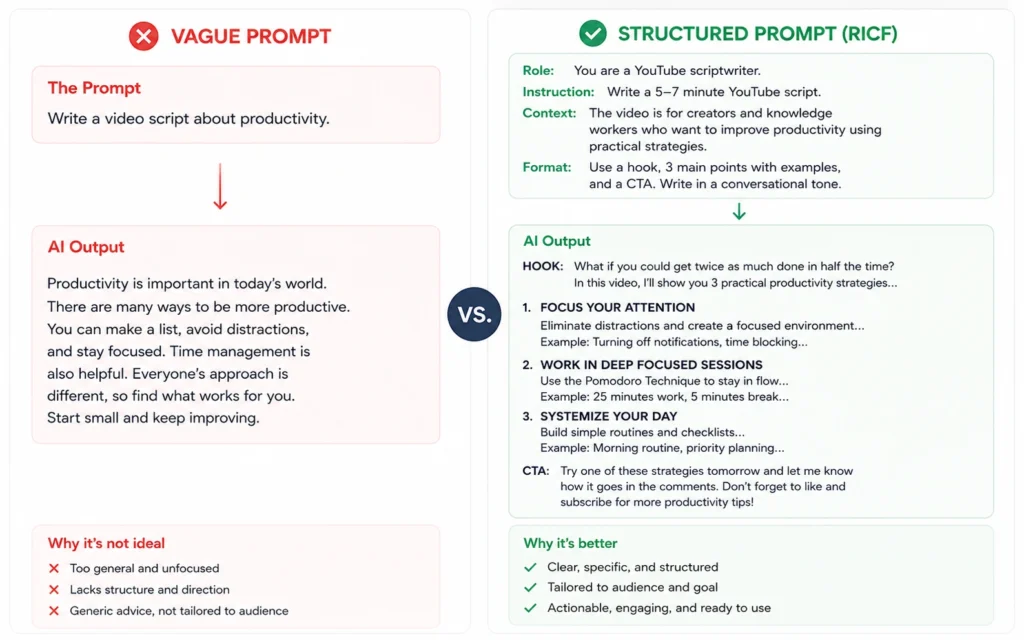
A vague prompt looks like this:
“Write a blog post about SEO.”
The output will be generic, 1,200 words of fluff, and you’ll spend 25 minutes editing it into something useful.
A structured prompt looks like this:
“Write a 900-word blog post introduction about SEO for small business owners in India. Tone: direct, practical, no hype. Focus on the one mistake most beginners make (publishing generic pages). Include 1 concrete example. End with a question that prompts comments.”
The output is usable in 5 minutes. You saved 20 minutes.
I timed this exact comparison. Vague prompt: 32 minutes total (8 minutes to get output, 24 minutes to edit). Structured prompt: 7 minutes total (2 minutes to get output, 5 minutes to tweak). That’s 25 minutes saved per draft.
Prompt Engineering Techniques Cheat Sheet shows the exact structure you can copy for any task.
How to Write Effective Prompts (Step-by-Step)
Step 1: Define the task in one sentence
State exactly what output you need. Not “help me with writing.” Not “give me ideas.” Specific: “Write a 900-word blog post introduction about X for Y audience.”
Step 2: Add context and constraints
Include:
- Audience (who is reading?)
- Purpose (what should they do after reading?)
- Tone (direct, friendly, formal, skeptical?)
- Format (paragraphs, bullet points, table?)
- Length limits (word count, character count, or “short/medium/long”)
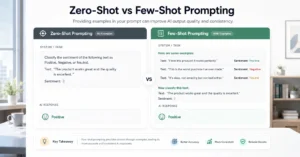
Step 3: Provide examples (few-shot prompting)
Show 1–2 examples of the desired output format. This is called few-shot prompting, and it’s one of the most reliable techniques for consistent output.
Example:
“Here’s the tone I want:
Example 1: ‘SEO rewards clarity, patience, and a refusal to publish generic pages.’
Example 2: ‘Most rankings are lost because the page never earned a reason to exist.’
Match this tone.”
Step 4: Iterate with feedback
The first output won’t be perfect. Tell the AI what’s wrong: “Too long,” “Too formal,” “Missing the example.” Refine until it works.
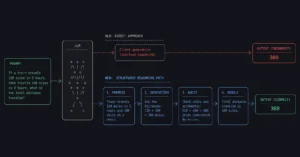
Chain-of-thought prompting works well for math and logic problems, but for creative writing it often adds unnecessary verbosity. I use it for code debugging and analysis, but skip it for blog posts and emails. Use the technique that fits the task.
How to Use ChatGPT for Beginners walks through these steps with real ChatGPT examples.
Prompt Templates You Can Copy Today
Template 1: Blog Post Outline
“Create a 7-section blog post outline about [topic] for [audience]. Tone: [tone]. Each section should have a specific angle, not a generic heading. Include 1 concrete example per section.”
Template 2: Email Draft
“Write a 120-word email to [recipient type] about [purpose]. Tone: [tone]. Include: (1) clear subject line, (2) one sentence stating the ask, (3) one sentence explaining why it matters, (4) clear call to action.”
Template 3: Content Repurposing
“Turn this 800-word blog post into 3 LinkedIn posts. Each post should be 180–220 words. Post 1: key insight. Post 2: contradiction of common belief. Post 3: actionable step. Match this tone: [paste example].”
Template 4: Analysis Task
“Analyze this text and extract: (1) main argument, (2) 3 supporting points, (3) one weakness. Format as a table. Text: [paste text].”
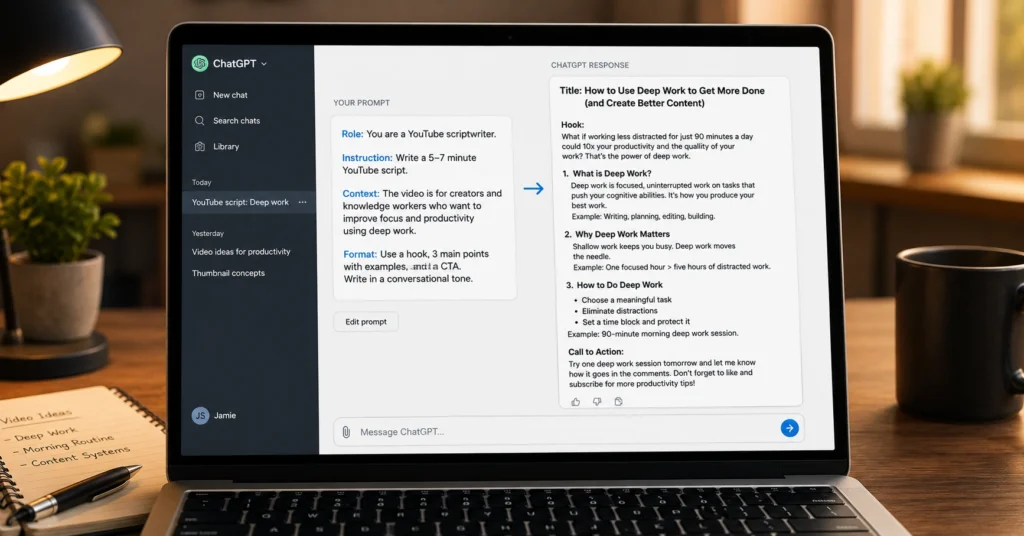
These templates work because they include task, context, constraints, and format—exactly what the AI needs to produce usable output.
Tools to Use for Prompt Engineering
ChatGPT (OpenAI)
- Good at: general writing, brainstorming, code assistance, iteration
- Limits: can be verbose, sometimes hallucinates facts
- Best for: beginners, content creation, practical workflows
Claude (Anthropic)
- Good at: long-form writing, analysis, summarization
- Limits: slower on some tasks, less versatile for code
- Best for: reading long documents, structured analysis
Gemini (Google)
- Good at: Google ecosystem integration, research
- Limits: output quality varies by task
- Best for: users already in Google workspace
AWS Bedrock / Databricks
- Good at: enterprise use, custom models, reliability
- Limits: requires setup, cost considerations
- Best for: businesses deploying AI at scale
For beginners, start with ChatGPT. It’s the most versatile for learning what is prompt engineering explained in practice. Once you master the basics, you can explore other tools for specific use cases.
AI for Content & Marketing Workflow shows how to use these tools in real content production.
Why Prompt Engineering Matters in 2026
In 2026, prompt engineering is evolving into context design. The work of the “prompt engineer” hasn’t become obsolete, but it must evolve into a context designer for AI agents.
One of the hottest trends in 2026 is the use of more elaborate structures in instructions given to AI-driven models to solve complex problems involving process automation. Traditional prompt engineering focused on crafting a well-designed instruction to elicit a single response. Context design treats AI-driven models as dynamic resources that must be structured and enriched to harness their potential in the productive economy.
This means:
- Context windows are no longer just snapshots—they’re evolving states that adapt to user preferences and history
- Agentic AI becomes more precise by leveraging data, history, and connected tools
- Professionals without advanced programming knowledge can generate sophisticated AI-driven solutions
But the core remains: clear communication. Whether you’re doing traditional prompt engineering or context design, the goal is the same—get the AI to understand the task, tone, context, and audience.
Common Mistakes That Waste Time
Mistake 1: Asking instead of directing
- Bad: “Can you help me write something about SEO?”
- Good: “Write a 900-word blog post introduction about SEO for small business owners in India.”
Mistake 2: No constraints
- Bad: “Write a blog post.”
- Good: “Write a 900-word blog post with 7 sections, direct tone, 1 concrete example per section.”
Mistake 3: Expecting perfection on the first try
- Reality: Iteration is part of the workflow. Tell the AI what’s wrong and refine.
Mistake 4: Using the same prompt for every task
- Reality: Different tasks need different structures. Use templates, but adapt them.
Mistake 5: Ignoring the 2026 shift to context design
- Reality: For complex workflows, static prompts aren’t enough. Start thinking about how context flows across interactions.
When Prompt Engineering Won’t Help
Prompt engineering isn’t a cure-all. It won’t help if:
- The AI model doesn’t have the capability you need (e.g., real-time data without tools)
- You’re asking for something ethically problematic
- The task requires human judgment that AI can’t replicate (e.g., final creative decisions for brand voice)
- You haven’t defined what success looks like
In these cases, the problem isn’t the prompt. The problem is the tool or the expectation.
Frequently Asked Questions About What Is Prompt Engineering
What is prompt engineering?
Prompt engineering is the skill of communicating clearly with AI systems to get the best possible output. It involves writing instructions that specify the task, context, tone, format, and constraints so the AI understands exactly what you need
Why does prompt engineering matter?
Prompt engineering matters because vague prompts produce vague outputs. Clear prompts reduce editing time, improve output quality, and make AI usable for real work. A well-structured prompt can cut draft time from 30 minutes to 5 without increasing review time.
Is prompt engineering still relevant in 2026?
Yes. In 2026, prompt engineering is evolving into context design—structuring dynamic information ecosystems for AI agents. The core skill of clear communication remains essential, but now includes orchestrating data flow, history, and tools across interactions.
What are the basics of prompt engineering for beginners?
Start with these basics: define the task in one sentence, add context (audience, purpose), set constraints (length, format, tone), provide 1–2 examples, and iterate. Use zero-shot for simple tasks and few-shot or chain-of-thought for complex ones.
What is the what is prompt engineering definition in simple terms?
The what is prompt engineering definition is: the process of guiding generative AI to produce desired outputs by choosing the right formats, phrases, words, and symbols.
Continue Exploring:
- Prompt Engineering Hub for deeper techniques and workflows.