





Learn SEO
6 Topics • 106 Guides


No posts found in this category.
To build a high-ranking, truly valuable article, you must use AI content workflows to generate the structural blueprint before writing a single paragraph of prose. Most marketers let an LLM write a complete draft from a simple keyword phrase, which immediately outputs bloated, repetitive text that breaks down under professional scrutiny. During a content sprint...
Most prompt engineering templates fail because they’re written for the tool, not for the task. A template that says “Write a blog post about [topic]” saves zero time — it just moves the blank page. The prompt engineering templates that actually work — and the ones worth keeping in your 2026 library — start with...
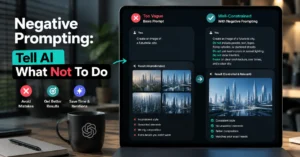
Negative prompting AI is one of the simplest prompt engineering techniques available, yet it’s routinely overlooked. After testing hundreds of prompts across writing, research, summarization, and content workflows, a pattern appears quickly: many weak AI outputs are not caused by missing instructions. They’re caused by missing constraints. A model can follow your request and still...
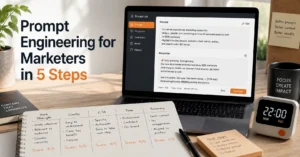
Most marketers don’t get bad AI copy—they get untested prompts. You’ll improve output faster by treating prompts like small experiments: define the job, run a baseline, add structure, iterate with examples, then lock the version that actually reduces edit time. I tested this flow on a landing page brief last Thursday and cut revision time...

Most people don’t have bad prompts—they have untested ones. You’ll improve AI prompts faster by treating them like small experiments: define the job, run a baseline, add structure, iterate with examples, then lock the version that actually saves edit time. I tested this flow on a messy marketing brief last Tuesday and cut revision time...

Most internal linking advice treats links like a numbers game. Add five links per post. Link to your pillar pages. Use exact-match anchor text. Follow this formula and watch your rankings climb. It doesn’t work that way. I spent six months adding internal links to every article I published — systematically, religiously, following every “best...

The issue usually isn’t Google. It’s the publishing workflow. Someone downloads a stock image called IMG_4927.jpg, uploads a 4.8 MB file, skips alt text, and publishes. Then six months later the page is slow, image search traffic is nonexistent, and nobody remembers where the image came from. I’ve seen teams spend hours adjusting title tags...
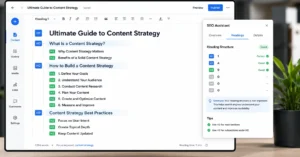
Your H1 should answer the query. Your H2s should map the page’s logic. Your H3–H6 should appear only when the content genuinely needs deeper nesting. That’s header tags SEO in one sentence. Everything else is decoration. Most beginners overthink this. They stuff keywords into every heading, skip levels to “save space,” or let their CMS...

Keyword stuffing did not disappear because search engines became smarter. It disappeared because readers stopped tolerating pages that sounded unnatural. A page can mention the target keyword twenty times and still fail. Another page can mention it only a handful of times and outperform it because it answers the searcher’s question better. I’ve reviewed pages...

A good keyword research template doesn’t save you time because it’s organized. It saves you time because it stops you from publishing pages nobody needed in the first place. That’s the mistake most beginners make. They collect hundreds of keywords, sort them by search volume, then start writing. Three months later, they have twenty pages...

6 Topics • 106 Guides

5 Topics • 88 Guides

5 Topics • 90 Guides

5 Topics • 0 Guides
We use cookies to enhance your browsing experience, serve personalised ads or content, and analyse our traffic. By clicking "Accept All", you consent to our use of cookies.