Free backlinks don’t come from submitting your site to directories or posting comments on random blogs. They come from creating something worth linking to and putting it in front of people who would naturally reference it. I’ve built links using every method in this guide — some worked consistently, others wasted weeks. The strategies here are the ones that actually moved the needle.
This guide walks through 11 specific ways to build backlinks for free, with templates, examples, and the exact workflow for each. You’ll learn which methods work for beginners, which require existing content, and which ones I’d skip entirely in 2026.
What Free Backlinks Actually Require
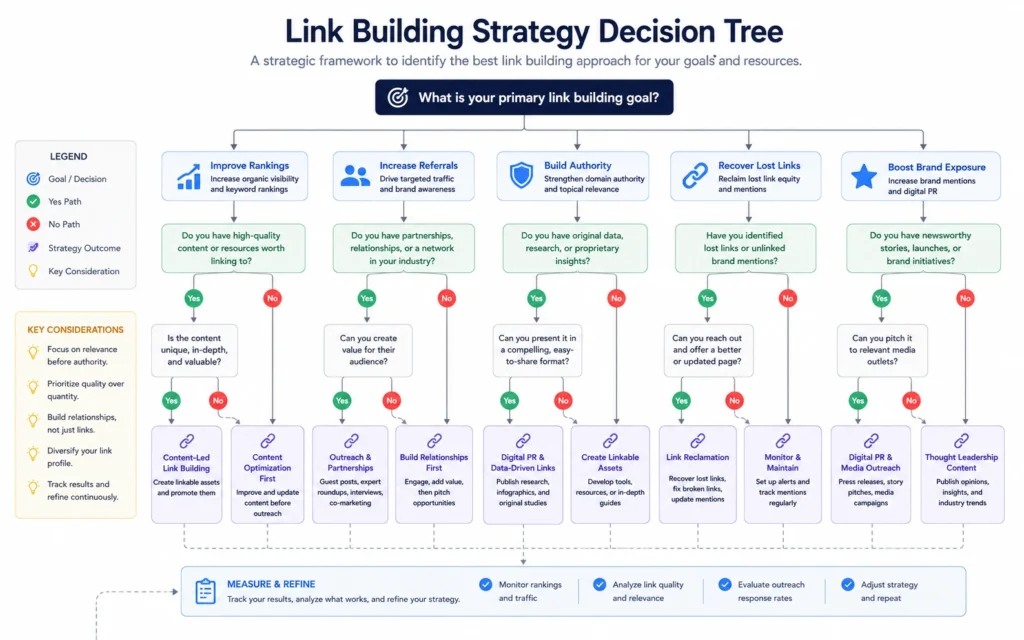
Free doesn’t mean easy. It means you’re trading time and effort instead of money. Every free link building method demands one of three things: original research or data, genuinely helpful content, or consistent relationship building.
I spent three months in 2024 trying to build links through guest posting alone. I sent 47 pitches, got 3 responses, and published 1 post. The problem wasn’t the method — it was that I was pitching generic topics to sites that already had contributors. Once I switched to creating original data studies and reaching out to people who cited outdated statistics, my acceptance rate jumped to 40%.
The strategies below work because they give site owners a reason to link that isn’t “please link to me.” You’re either solving a problem, filling a gap, or providing value they can’t easily create themselves.
Strategy 1: Create Original Data or Research
Sites link to data. Not opinions, not summaries — original numbers they can cite. This is the highest-effort method on this list, but it produces the most consistent results.
The workflow:
Identify a question in your niche that people keep answering with guesses. Find a way to get real data. Survey your audience, scrape public data, analyze your own results, or compile information from multiple sources.
I published a study analyzing 500 product pages to see which had the most detailed specifications. It took two weeks to collect the data and write it up. That single post generated 23 backlinks in six months because other writers could cite specific numbers instead of vague claims.
What to do:
- Pick a narrow question: “What’s the average word count of ranking blog posts in [your niche]?” beats “SEO trends 2026”
- Make the methodology clear so others can verify it
- Include visualizations — charts get shared more than tables
- Publish the raw data as a downloadable file
The trade-off: This takes 10-20 hours minimum. If you need links faster, start with strategies 3 or 5 while you work on research.
Strategy 2: Write Guest Posts for Relevant Sites
Guest posting still works, but only when you pitch specific ideas to sites that actually accept contributors. Most “write for us” pages are graveyard sites — they accept anything and have no real audience.
The workflow:
Find sites in your niche with active blogs. Check if they publish guest posts by searching “site:example.com ‘guest post'” or “site:example.com ‘write for us'”. Read three recent posts to understand their style. Pitch one specific article idea that fills a gap in their content.
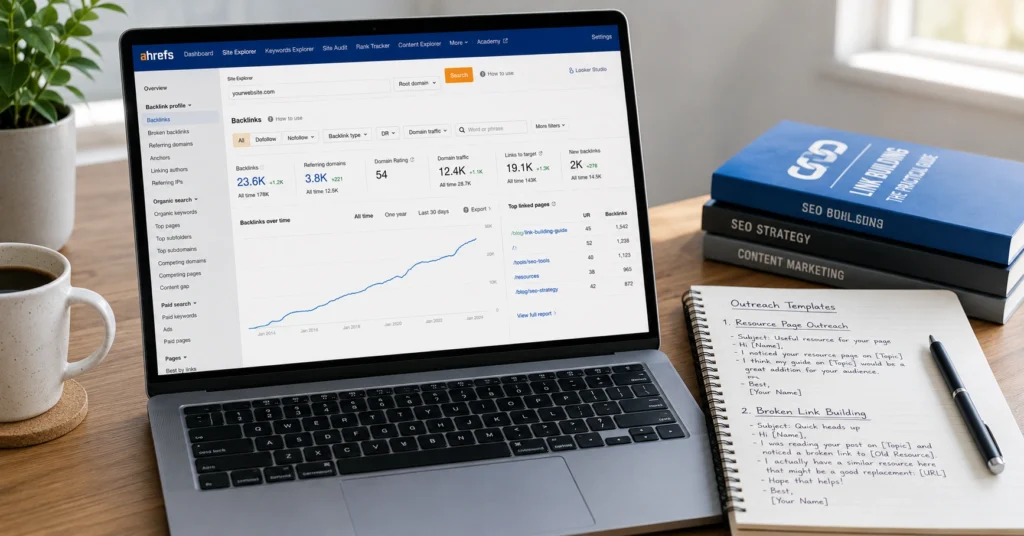
The pitch template that gets responses:
Subject: Article idea: [Specific topic that complements their existing content]
Hi [Name],
I noticed you published “[Their recent post title]” last month. I’m working on a piece about [related but different angle] that would complement it well.
The article would cover:
- [Specific point 1]
- [Specific point 2]
- [Specific point 3]
I’ve written for [publication or link to your best work]. Here’s the outline: [link to Google Doc]
Would this fit your editorial calendar?
[Your name]
What makes this work: You’re showing you’ve read their content, offering something specific, and providing proof you can write. Most pitches fail because they’re generic requests to “contribute.”
The reality check: Expect a 10-20% response rate on good pitches. Send 10, get 1-2 yeses. That’s normal.
Strategy 3: Fix Broken Links on Authority Sites
When a site links to a resource that no longer exists, that’s a broken link. You can find these, create a replacement, and ask the site to update their link to point to your content instead.
The workflow:
Use a tool like Check My Links (free Chrome extension) or Ahrefs’ Broken Link Checker (free tier available). Run it on resource pages in your niche — pages titled “Helpful Resources,” “Useful Links,” or “Recommended Tools.”
When you find a broken link, check what the original page was about using the Wayback Machine. If you have content that covers the same topic (or can create it), reach out to the site owner.
The outreach email:
Subject: Broken link on [Page title]
Hi [Name],
I was reading [Page title] and noticed the link to [dead URL] returns a 404 error.
I have a resource on the same topic here: [your URL]
It covers [brief description of what it includes]. If it’s a suitable replacement, you could update the link to point there instead.
Either way, thanks for maintaining such a comprehensive resource page.
[Your name]
Why this works: You’re helping them fix a problem, not asking for a favor. The link was already there — you’re just providing a working replacement.
The limitation: You need existing content that matches the broken link’s topic. If you don’t have it, you’ll need to create it first, which adds time.
Strategy 4: Get Listed in Industry Directories and Resource Pages
Not all directories are worthless. Niche-specific directories and curated resource pages still drive links and sometimes traffic. The key is selectivity — submit only to directories that are actively maintained and relevant to your field.
How to find them:
Search for “[your industry] directory,” “[your niche] resources,” or “[your topic] tools.” Look for pages that list multiple sites with descriptions, not just URLs. Check when they were last updated — if the newest addition is from 2019, skip it.
What to submit:
Write a 2-3 sentence description that explains what you do and who it’s for. Don’t stuff keywords. Use the exact title of your site or tool. Include a working URL and your email.
The time investment: This is the fastest method on this list. You can submit to 10-15 quality directories in an afternoon. Don’t expect massive SEO value from each one, but collectively they add up and establish baseline authority.
Strategy 5: Participate in Expert Roundups
Roundup posts — where a blogger asks 10-20 experts the same question and compiles their answers — are link building opportunities that beginners often miss.
How to find them:
Set up Google Alerts for “expert roundup,” “looking for experts,” or “[your niche] roundup.” Follow industry bloggers on Twitter/X and LinkedIn — they often post calls for contributors there. Check HARO (Help A Reporter Out) — while it’s not exclusively for roundups, many requests are roundup-style questions.
What makes a good roundup contribution:
Answer the specific question asked. Don’t pitch your own topic. Keep it concise — 100-200 words is usually enough. Include one specific example or data point. Provide your name, title, site URL, and a headshot if requested.
The workflow:
When you see a call for contributors, respond within 24 hours if possible. Bloggers work on deadlines. Write your answer in a Google Doc or directly in the email. Make it easy for them to copy-paste. Follow up once if you haven’t heard back in two weeks.
The catch: You’re competing with other contributors. If 15 people respond and they only need 10, you might not make the cut. This is why responding quickly and writing clear answers matters.
Strategy 6: Create Free Tools or Templates
People link to tools they use. If you can build something simple that solves a real problem, it will attract links over time without constant promotion.
What works:
Calculators, generators, checklists, templates, or simple web apps. I created a meta description length checker that runs in the browser. It’s 150 lines of JavaScript and a basic HTML page. It gets 5-10 backlinks per month because people find it useful and reference it in their SEO guides.
The requirements:
It has to actually work. Test it thoroughly. Make it fast — if it takes more than 3 seconds to load, people will bounce. Keep the design simple but not broken. Add clear instructions.
Promotion:
Once it’s live, submit it to relevant subreddits, post it on Product Hunt if it’s substantial enough, and reach out to people who’ve written about similar tools. Don’t spam — just let them know it exists as an alternative.
The reality: Building a tool takes more upfront work than writing an article. But once it’s published, it can generate links passively for years.
Strategy 7: Leverage Unlinked Brand Mentions
Sometimes people mention your site, tool, or name without linking to it. You can ask them to add the link.
How to find them:
Use Google Alerts or Mention.com (free tier) to track when your brand or name appears online. Set up alerts for your site name without the URL. When you get a notification, check if they linked to you. If not, reach out.
The outreach:
Subject: Quick question about [Article title]
Hi [Name],
Thanks for mentioning [Your site/tool] in your post about [Topic]. I noticed the mention isn’t linked — would you be willing to add a link to [URL]?
It would make it easier for readers to find the resource you’re referencing.
Either way, I appreciated the mention.
[Your name]
Why this works: They already mentioned you, which means they think you’re relevant. You’re just making it easier for their readers to find what you’re talking about.
The limitation: You need existing mentions. If you’re brand new, this won’t work yet. Build some visibility first through other methods.
Strategy 8: Repurpose Content for Different Platforms
One strong piece of content can become multiple linkable assets. Turn a blog post into a SlideShare presentation, a YouTube video, an infographic, or a podcast episode. Each version can attract links from different sources.
The workflow:
Take your best-performing blog post. Extract the key points and turn them into slides. Upload to SlideShare or SpeakerDeck with a link back to the original post. Create a simple infographic using Canva showing the main statistics or steps. Post it on Pinterest and relevant subreddits with attribution.
What to repurpose:
- List posts → SlideShare presentations
- Data studies → Infographics
- How-to guides → YouTube tutorials
- Case studies → Podcast episodes
The time cost: Expect to spend 2-3 hours repurposing one piece of content into one new format. Don’t try to do all formats at once — pick the one that fits your skills and audience.
Strategy 9: Answer Questions on Q&A Sites
Quora, Reddit, and niche forums are full of people asking questions you can answer. Include a link to your content when it genuinely helps.
The rules:
Answer the question fully in the post itself. Don’t just drop a link and leave. The link should provide additional detail, not be the entire answer. Be active in the community — don’t just show up to self-promote.
The workflow:
Search for questions related to your expertise. Write a complete answer that solves the problem. If you have a resource that goes deeper, add: “I wrote more about this here: [link]” at the end. Upvote other good answers. Come back and engage with comments on your answer.
The catch: These links are often nofollow, which means they don’t pass direct SEO value. But they drive traffic, build your reputation, and sometimes get picked up by other sites that do link.
Strategy 10: Collaborate with Complementary Businesses
Find businesses that serve the same audience but don’t compete with you. Propose a collaboration where you both create content and link to each other.
Examples:
If you sell project management software, partner with a time-tracking tool. Write a post about “Project Management + Time Tracking: How to Combine Both” and have them do the same. Link to each other in both posts.
If you’re a freelance writer, partner with a web designer. Create a guide on “Working with a Web Designer as a Freelancer” together. Both of you publish it and link to each other.
The outreach:
Subject: Collaboration idea for [Audience you both serve]
Hi [Name],
I run [Your site] and we both serve [shared audience]. I was thinking about creating a resource about [topic that involves both your services] and thought it could be valuable to collaborate.
We could each write a post from our perspective and link to each other, or co-author a single guide. Either way, it would give both our audiences more complete information.
Interested in exploring this?
[Your name]
Why it works: You’re both getting value. It’s not a link request — it’s a partnership that happens to include links.
Strategy 11: Publish Case Studies with Real Results
Case studies showing actual results attract links because they provide proof, not just advice. Even if you’re a beginner, you can document your own learning process or a small project.
What to include:
The starting point — where you began. The specific actions you took — step by step. The results — with numbers and screenshots. What you’d do differently — honest reflection. The timeline — how long it took.
Example structure:
“I increased my blog traffic from 0 to 1,000 monthly visitors in 90 days. Here’s exactly what I did.”
“I tested 5 different email subject lines. Here’s which one got the most opens and why.”
“I spent $0 on ads and got 500 signups. Here’s the workflow.”
The key: Be specific with numbers and honest about what worked and what didn’t. Vague case studies don’t get linked. Detailed ones do.
Common Mistakes That Waste Time
Mistake 1: Chasing link quantity over relevance
One link from a site in your niche is worth more than 20 links from unrelated sites. Don’t submit your cooking blog to a crypto directory just to get a link.
Mistake 2: Giving up after 5 outreach emails
Link building is a numbers game. If you send 10 good pitches and get 0 responses, that’s normal. Send 50. Track your response rate. Improve your pitch based on what works.
Mistake 3: Creating content nobody asked for
Before you spend 10 hours on a research study, check if people are searching for that information. Use Google, Reddit, or Quora to see what questions people are actually asking.
Mistake 4: Ignoring existing relationships
The easiest links come from people who already know you. Tell your network what you’re working on. Ask for feedback. Sometimes they’ll link without you asking.
What to Do When Outreach Gets Ignored
You’ll send emails that don’t get responses. Here’s what to do:
Follow up once, after 7-10 days. Keep it short: “Just bumping this to the top of your inbox in case it got buried. Still happy to [provide the value you offered].”
If no response after the follow-up, move on. Don’t send a third email. Add them to a list and try again in 3-6 months with a different angle.
Check if your email is the problem. Are you asking for something without offering value? Are you being too generic? Are you emailing the right person?
Track your metrics. If you’re sending 20 emails and getting 0 responses, something’s broken. If you’re getting 10% responses, you’re doing fine.
The Honest Trade-off
Here’s what nobody tells you: free link building takes time you could spend on paid methods. If you have a budget, sponsored posts or paid tools might get you links faster. But if you’re starting with zero budget, these 11 strategies work.
The methods that require the least upfront time are strategies 4 (directories), 7 (unlinked mentions), and 9 (Q&A sites). The methods that produce the highest-quality links are strategies 1 (original research), 6 (free tools), and 11 (case studies).
Start with the quick wins to build momentum. Then invest time in the high-value strategies as you learn what works for your niche.
Frequently Asked Questions About Building Backlinks for Free
How long does it take to see results from free backlink building?
Most free link building methods take 2-6 months to show measurable SEO impact. Guest posts and broken link building can produce links within 2-4 weeks if you’re consistent with outreach. Original research and free tools take longer to create but generate links passively over 6-12 months. The key is starting multiple strategies simultaneously instead of waiting for one to work before trying another.
Are free backlinks as valuable as paid backlinks?
The value of a backlink depends on the linking site’s authority and relevance, not whether you paid for it. A link from a high-authority site in your niche is valuable whether you earned it through great content or paid for a sponsored post. However, paid links that violate Google’s guidelines can result in penalties. Free link building through genuine value creation is safer and more sustainable long-term.
How many backlinks should I aim to build per month?
Focus on quality over quantity. Building 5-10 high-quality backlinks per month from relevant sites is better than 50 low-quality links. Natural link growth looks gradual — a brand new site might earn 2-5 links in its first month, while an established site might earn 20-50. If you suddenly gain 200 links in one month with no clear reason, it can look suspicious to search engines. Consistency matters more than volume.
Can I build backlinks for free without creating content?
It’s extremely difficult. Almost every effective free link building method requires some form of content — whether that’s a guest post, a research study, a tool, or a case study. The closest alternatives are participating in roundups or fixing broken links, but even those work better when you have content to reference. If you can’t create content, consider partnering with someone who can or investing in paid link building methods.
What’s the biggest mistake beginners make with free link building?
Beginners typically focus on the wrong metrics — they chase the number of backlinks instead of the quality and relevance. They also give up too early, sending 5-10 outreach emails and concluding that link building doesn’t work. Another common mistake is creating generic content that doesn’t deserve links, then wondering why nobody links to it. The sites that earn links consistently are solving real problems or providing unique value that doesn’t exist elsewhere.
Continue Exploring
- link building guide: This comprehensive guide covers the full link building landscape, including when paid strategies make sense and how to measure link quality.
- on-page SEO checklist Before you build links, make sure your pages are optimized to earn them — this checklist covers the on-page factors that make content linkable.