Searching for the best SEO tools to skyrocket your rankings? In this guide, we break down the top free and paid options to help you grow your website traffic in 2026.
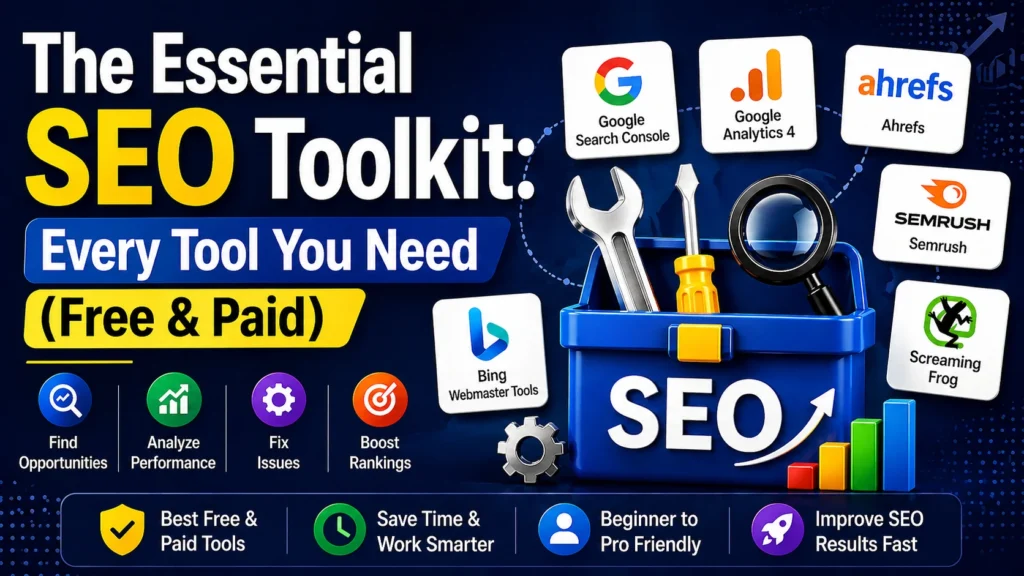
The Essential SEO Tools Toolkit: Every Resource You Need
SEO in 2026 is no longer just about picking a few keywords and hoping for the best. With the rise of AI-driven search, generative snapshots, and hyper-competitive SERP features, your success depends entirely on the data you have at your disposal. Choosing the right SEO tools isn’t just a luxury anymore—it is the difference between ranking on page one or being invisible to your audience.
The market is flooded with thousands of options, from all-in-one enterprise suites to niche free utilities. Understanding which tools actually move the needle and how they integrate into your workflow is foundational to any digital growth strategy. However, before you can master these tools, you must understand the mechanics of the platforms they analyze.
Deep Dive: To get the most out of your toolkit, it’s essential to learn how search engines work: crawling, indexing, and ranking. Understanding this process will help you interpret tool data with much higher precision.
To maintain a high-quality site, always align your strategy with the official Google Search Essentials guidelines. This ensures that while you use various SEO tools, you aren’t violating any search policies.
Why Professional SEO Tools are Non-Negotiable in 2026
In the current digital landscape, relying on guesswork is a recipe for failure. As search engines evolve with AI-driven results, using the best SEO tools becomes a mechanical necessity to stay competitive. These platforms provide the granular data required to understand search intent, track keyword fluctuations, and identify technical bottlenecks that the naked eye simply cannot see.
Whether you are a solo blogger or managing an enterprise site, your toolkit determines your speed of execution. By leveraging advanced SEO tools, you can automate the most tedious parts of search engine optimization, such as site audits and backlink monitoring, allowing you to focus on high-level strategy.
Top-Rated SEO Tools for Comprehensive Audits
Technical health is the foundation of any ranking strategy. If your site has crawl errors or broken links, even the best content won’t rank.
- Screaming Frog SEO Spider: This is one of the most powerful free SEO tools for technical analysis. It crawls your website just like a search engine bot would, identifying duplicate content, missing metadata, and 404 errors.
- Sitebulb: If you prefer a more visual representation of your data, Sitebulb offers “clues” that prioritize which technical issues you should fix first.
Ahrefs vs. Semrush: The Battle of the Best SEO Tools
When it comes to paid software, two names dominate the industry. Choosing between them depends on your specific workflow:
- Semrush: Known as the “All-in-one” marketing suite, Semrush excels in keyword research and PPC data. Their Keyword Magic Tool is widely considered one of the best SEO tools for finding long-tail opportunities.
- Ahrefs: Their link index is legendary. If your strategy revolves around link building and analyzing competitor backlink profiles, Ahrefs is the industry gold standard. Their “Content Explorer” also helps you find topics that are getting high social shares.
Leveraging Free SEO Tools for Maximum ROI
You don’t need a massive budget to see results. The most accurate data actually comes directly from the search engines themselves. Utilizing free SEO tools like Google Search Console and Bing Webmaster Tools is the first step every practitioner should take. These platforms provide direct insights into how your site is being indexed and which queries are driving the most impressions.
How to Conduct Keyword Research Using These SEO Tools
Knowing which SEO tools to use is only half the battle; knowing how to use them is where the real growth happens. Follow this simple 3-step process to find high-traffic, low-competition keywords:
Step 1: Brainstorm Seed Keywords
Start by entering a broad topic into free SEO tools like Google Keyword Planner. This will give you a baseline of search volume and seasonal trends.
Step 2: Analyze Competitor Gaps
Use a premium tool like Ahrefs or Semrush to “spy” on your competitors. Look for keywords they rank for on page one that you haven’t covered yet. This is often the fastest way to find proven content ideas.
Step 3: Check Search Intent
Before writing, search for the keyword on Google. If the results are all “How-to” guides, your content should be a guide. If they are product pages, you need a landing page. Aligning with intent is the most overlooked part of using SEO tools effectively.
Summary: Building Your Ultimate SEO Toolkit
As we have explored, the best SEO tools of 2026 are those that provide actionable insights rather than just raw data. Start with the free foundations like Google Search Console, and as your traffic grows, invest in a premium suite like Semrush or Ahrefs to take your site to the next level.
By consistently auditing your site and monitoring your rankings, you ensure that your “Skill Journey” in the world of digital marketing is both profitable and sustainable.