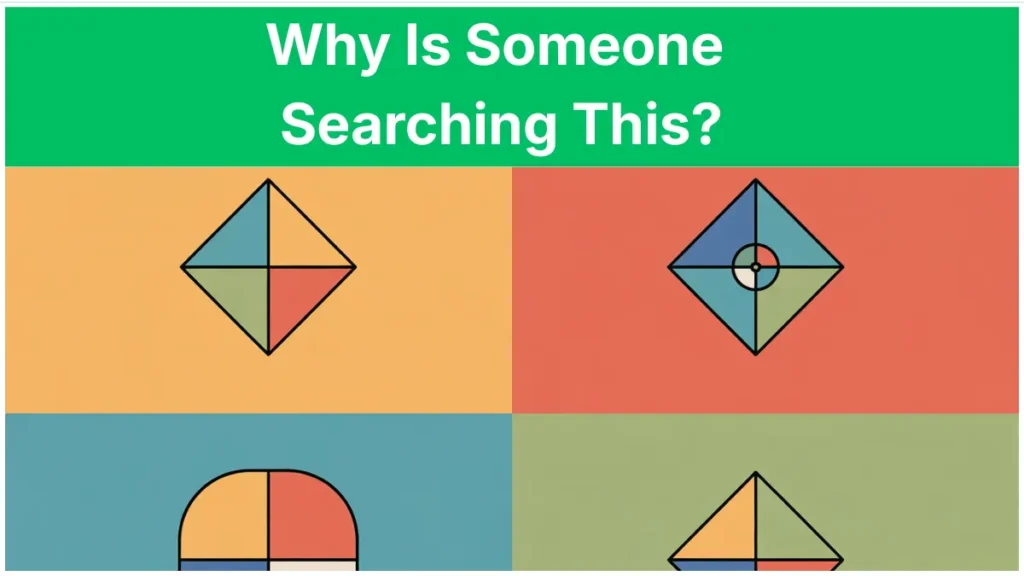
Before you target a keyword or write a single word of content, you need to answer one question: why is someone searching for this?
That question has a name — search intent SEO — and understanding it is the single most important concept in all of SEO. Every ranking decision Google makes starts here. Get intent right and your other SEO efforts have solid ground to work from. Get it wrong and nothing else saves you.
This guide explains what search intent is, the four types you need to know, how Google detects it, and exactly how to match your content so it earns rankings.
Key Terms
Search intent — The goal or reason behind a search query. The why behind what someone typed.
Query — The word or phrase a person types into a search engine.
SERP — Search Engine Results Page. The page Google shows after a search is performed.
Ranking factor — A signal Google uses to decide how high a page appears in search results.
Content format — The structure of a piece of content: blog post, product page, listicle, how-to guide.
The Importance of Search Intent SEO for Rankings
The Goal Behind the Words
Search intent (also called user intent or keyword intent) is the underlying goal behind a search query. It is the reason someone typed those words — not just the words themselves.
Two searches can cover the same topic and carry completely different intent. “Running shoes” might come from someone curious about the market. “Buy Nike Air Zoom Pegasus size 10” comes from someone opening their wallet. Same broad topic. Entirely different intent, content type, and page that should rank.
Why This Is Google’s First Question
Think of a shop assistant. Before recommending anything, they need to know: are you browsing, or are you ready to buy? Google asks the same question — across billions of queries, every day — and uses the answer to decide which pages deserve to rank.
Matching your content to search intent is not a ranking tactic. It is the prerequisite for every other tactic to work. [IL → /seo/beginners-guide-to-seo/ | understand the foundational framework that connects search intent to every other SEO decision]
Mastering the 4 Pillars of Search Intent SEO
Google and the SEO industry recognise four primary types of search intent. Every keyword you target will belong to one — sometimes two — of these categories.
Informational Intent
The searcher wants to learn something. They have a question and want a clear answer.
Example queries: what is domain authority, how does Google crawl a website, why is my page not indexed
Content that ranks: Blog posts, how-to guides, explainer articles, educational videos.
Navigational Intent
The searcher wants to reach a specific website or page. They already know the destination — Google is just the vehicle.
Example queries: Google Search Console login, Ahrefs pricing page, The Skill Journey SEO guide
Content that ranks: The exact brand page or destination they are looking for. If someone is searching for a competitor’s brand, do not attempt to intercept it — you will not rank.
Commercial Intent
The searcher is researching before making a decision. They are comparing options and evaluating choices — not yet committing. This is sometimes called commercial investigation intent.
Example queries: best SEO tools 2026, Ahrefs vs Semrush, Screaming Frog review
Content that ranks: Comparison posts, review articles, “best of” listicles, buyer’s guides.
Transactional Intent
The searcher is ready to act — buy, download, sign up, or register — right now. This is the informational navigational transactional commercial intent spectrum at its most action-oriented end.
Example queries: buy Semrush subscription, download Screaming Frog free, sign up Ahrefs trial
Content that ranks: Product pages, pricing pages, sign-up landing pages, e-commerce category pages.
| Intent Type | What They Want | Example Query | Content Format That Ranks |
|---|---|---|---|
| Informational | To learn | “Buy the Semrush Pro plan” | Blog post, guide |
| Navigational | A specific page | “Ahrefs login” | Brand / destination page |
| Commercial | To compare | “best keyword tools 2025” | Comparison, listicle |
| Transactional | To act now | “buy Semrush Pro plan” | Product or landing page |
How Google Detects Intent
Reading the SERP as a Signal
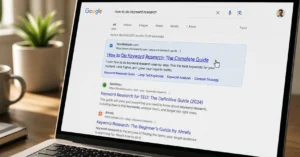
Google does not guess intent. It has learned it from billions of past searches, clicks, dwell times, and back-click signals. The clearest evidence of what Google has decided is the SERP itself.
Open Google for any keyword you want to target and read the results as data:
- Mostly blog posts and guides → Informational
- Mostly product pages and shopping ads → Transactional
- Mostly brand homepages or specific site pages → Navigational
- Mostly comparison articles and review roundups → Commercial
SERP features reinforce the signal. Featured snippets almost always appear for informational queries. Shopping carousels confirm transactional intent. Knowledge panels anchor navigational searches. [EL → https://developers.google.com/search/docs/appearance/featured-snippets | Google Search Central’s documentation on how featured snippets reflect query intent]
Mixed Intent: When It Is Not Clean
Some queries carry mixed intent — the SERP shows a blend of content types. Someone searching “protein powder” may trigger both informational articles and product pages simultaneously. In these cases, identify the dominant intent — the content type that appears in three or more of the top five results — and match that first.
How to Identify Intent for Any Keyword
Step-by-Step: The 5-Minute Intent Process
Use this process for every keyword before you create a page:
- Read the keyword modifiers. Words like how, what, why, guide point to informational intent. Words like buy, order, discount, near me signal transactional. Words like best, review, vs, top, alternative indicate commercial. A brand name alone signals navigational.
- Google the keyword in an incognito window. Incognito strips personalisation from results and gives you the cleanest possible signal of intent mapping SEO practitioners rely on.
- Examine the top five organic results. What content types are ranking — blog posts, product pages, landing pages, category pages?
- Note the format and angle. Are these beginner guides or expert breakdowns? Comparison listicles or step-by-step tutorials? The format tells you how to structure your content. The angle tells you who it is for.
- Use this as your benchmark. Match the dominant content type, format, and angle — then compete on depth, specificity, and accuracy.
This process takes under five minutes per keyword. Nothing in SEO delivers a better return on that time.
What Happens When You Mismatch Intent
The Double Penalty of Getting It Wrong
Intent mismatch is the most common reason technically sound, well-written content never ranks. Here is exactly what happens.
Suppose you write a detailed 2,000-word blog post targeting “buy noise-cancelling headphones.” The content is thorough, well-structured, and genuinely useful. But every top result for that query is a product category page or an e-commerce listing. Google has classified this as a transactional query. Your blog post will not rank — because it is the wrong content type for the intent, regardless of how good it is.
The damage compounds. If users somehow reach your page, they leave immediately because they wanted to buy, not read. A high bounce rate signals to Google that your content failed to satisfy the query — reinforcing its decision not to rank you. You take a hit on bounce rate and rankings at once.
The solution is not to write better content. It is to create the right content for the intent — which starts with identifying intent before you write anything.
How to Match Your Content to Intent
The 3C Framework: Type, Format, Angle
Three variables determine whether your content matches intent. SEOs call this the 3C Framework:
Content Type — The format of the page: blog post, product page, landing page, category page, tool. Get this wrong and nothing else can save you.
Content Format — The structure within that content type. A blog post can be a how-to tutorial, a numbered listicle, a comparison article, or an explanatory deep dive. Each format signals something different to Google and to the reader.
Content Angle — The positioning and perspective: “for complete beginners,” “free options only,” “in 2025,” “for enterprise teams.” The angle tells both Google and the reader exactly who this content serves.
Run these three variables against the top-ranking pages for your target keyword. Match type, format, and angle — then differentiate through superior depth, precision, and accuracy. Once the 3C framework is correct, every other on-page element has a solid foundation to build on.
Frequently Asked Questions
What is search intent in SEO?
Search intent is the goal behind a search query — the reason someone typed those specific words into Google. It determines which content type will rank. Google’s core function is to match results to intent, and content that mismatches intent will not rank regardless of its technical quality or depth of coverage.
What are the 4 types of search intent?
The four types are informational (wants to learn), navigational (wants a specific site or page), commercial (comparing options before a decision), and transactional (ready to act — buy, sign up, or download). Most keyword tools including Ahrefs and Semrush label keywords with these four categories in their interfaces.
How do I find the search intent for a keyword?
Google the keyword in an incognito window and look at the top five organic results. Note the content type, the format, and the angle. That combination is Google’s own declaration of what best satisfies intent for that query — and it is more reliable than any tool estimate.